How Early Grief, Visual Preservation, and Sibling Solidarity Formed a Six-Volume Curriculum for Higher Education and Autonomous Publishing (SAMPLE)
One Thousand of the Greatest Lessons I Ever Learned from Photography
The Archive Precedes the Memoir: Visual Ethics, Family Provenance, and Archival Custody Beyond Algorithmic Enclosure
Lessons from a Commercial Photographer on Multi-Order Consequence Modeling, Bereavement, and Sovereign Documentation

OFFICIAL COVER ARTWORK — THE BLEU BOOK
Official cover artwork and promotional design for THE BLEU BOOK, a six-volume educational and collector’s series by Tasha Bleu. Unauthorized commercial reproduction, republication, modification, merchandise production, resale, or licensing of protected artwork is prohibited except as authorized in writing or permitted by law. Public display does not grant commercial usage rights. All copyright-protected elements remain the property of their respective rights holders.
© 2026 Tasha Bleu LLC. All rights reserved.
About The Author
My name is Tasha Bleu, Founding Principal of Tasha Bleu LLC. I am an independent commercial photographer, visual scholar, and executive creative director with sixteen years of field experience documenting global fashion, luxury, cultural institutions, hospitality, and commerce. My professional portfolio encompasses contributions to HYPEBEAST, HYPEBAE, Complex, Highsnobiety, GQ, Vogue, The Rake, and Ivy Style, complemented by comprehensive visual documentation across more than 150 international trade conventions, industrial environments, and commercial productions.
From international editorial syndication and visual ethnography to creative production, spatial architecture, interior design, and emerging technological ecosystems, my career has proven that photography operates far beyond the mechanics of image-making: it functions as a primary instrument of cultural documentation and institutional history. As I look toward the next sixteen years, my research and practice expand toward the future of human habitation, multigenerational legacy governance, archival preservation, global socio-spatial development, and the structural role visual narrative plays in shaping historical memory.
About The Compendium
1,000 of the Greatest Lessons I Ever Learned from Photography is an interdisciplinary, six-volume qualitative casebook analyzing the structural realities, ethical responsibilities, legal frameworks, and psychological dimensions that govern life behind the lens. Spanning commercial visual production, creative direction, spatial sociology, archival traditions, cognitive frameworks of perception, intellectual property law, micro-economics, and multigenerational estate governance, this work interrogates photography simultaneously as a rigorous professional discipline and as an ethical custody over collective memory. Through these dispatches, I examine the documentarian’s function as an institutional historian, the psychological mechanics of portraiture, the systematic preservation of human identity, and the custodial duty of safeguarding photographic archives far beyond the author’s lifespan. Some entries operate as concise tactical maxims; others document expansive field case studies—ranging from high-stakes event production and international commercial campaigns to ancestral memorial preservation and the technological horizon of digital archives. This text does not present a prescriptive commercial formula; it articulates an empirical record of what visual stewardship reveals regarding human existence, creative sovereignty, cultural memory, and the assets we inherit, defend, and bequeath.
The Pivot Toward Academic Rigor
I am Tasha Bleu: an independent commercial photographer, visual scholar, and executive creative director. Over the past sixteen years, my lens has documented global culture, luxury commerce, fashion, and editorial history. Across those years, I have arrived at an inescapable conclusion: photography operates far beyond surface aesthetics. It is a discipline of visual evidence, cognitive discernment, and generational stewardship.
Today, I am formally introducing the academic and pedagogical direction for my six-volume collection, THE BLEU BOOK.
What began as an intimate chronicle of professional practice is now deliberately structured as an interdisciplinary college-level curriculum. This collection is engineered for higher education: designed specifically for university students, seminar professors, academic researchers, research librarians, and institutional leaders seeking primary-source material grounded in lived experience, systems thinking, and ethical responsibility. My objective is straightforward: to transform sixteen years behind the lens into an enduring body of qualitative case studies, theoretical frameworks, and seminar inquiries that invite students to interrogate assumptions, analyze complex human environments, and apply systematic principles within their own fields of study.
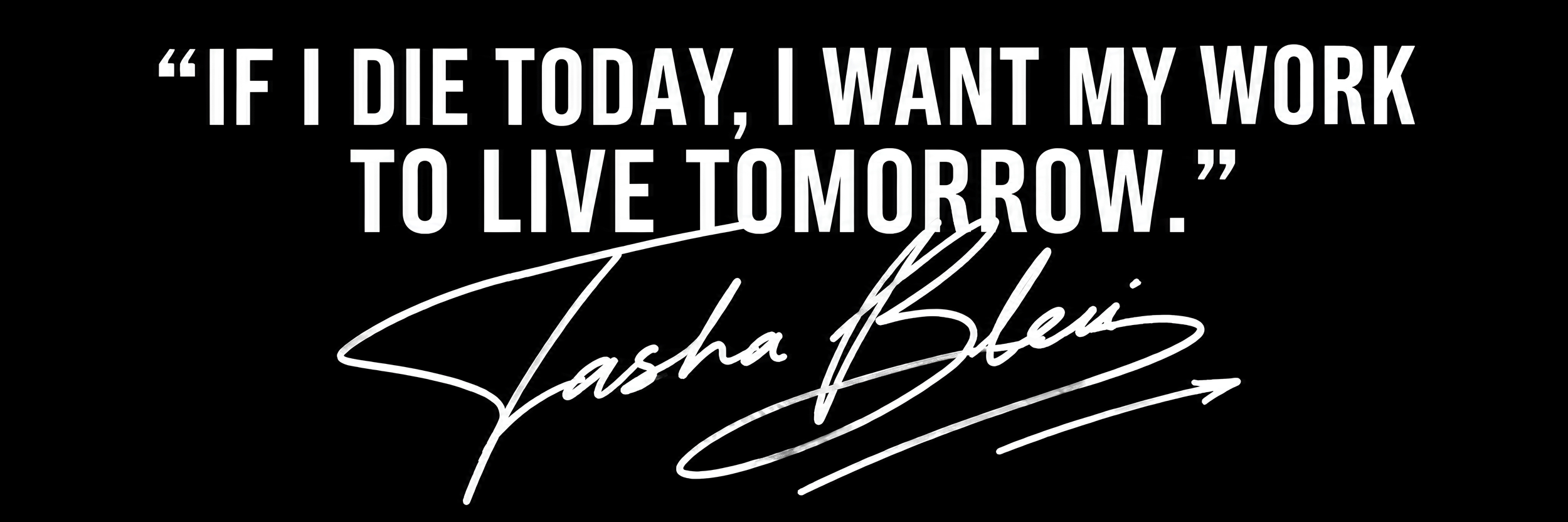
DEDICATION
To my father,
who trained me to preserve intellectual independence, speak without proxy, exercise rigorous discernment, and govern my actions through emotional intelligence long before I possessed the vocabulary to name those principles.
Your greatest inheritance was not an asset to be possessed, but a standard of judgment I would spend a lifetime learning to apply.
In Memoriam et Ad Futurum
(In Memory and Toward the Future)
The only constant in human affairs is change. The foundational question of an intellectual and operational life is whether we deliberately cultivate the judgment required to navigate it.
At sixteen years of age, I experienced a loss that fundamentally altered my understanding of mortality, agency, and purpose. Arriving at the hospital during my father’s final moments after his heart stopped without warning, the emotional weight of that departure overwhelmed me, and I lost consciousness. My high-school academic advisor, Steven Bartholomew—from The Metropolitan Regional Career and Technical Center (The Met) and Big Picture Learning—had already arrived and was waiting for me. In the immediate aftermath, he held me firmly by the shoulders and offered an insight whose depth I would not fully appreciate until decades later: my father would be deeply proud, he explained, because he had already instilled lifelong emotional intelligence in me.
It was 2005. At that stage of my life, I lacked the theoretical vocabulary to contextualize his observation. While emotional intelligence was already an established field of psychological inquiry, I had not yet encountered its broader relevance to organizational behavior, executive leadership, institutional governance, and human development. Yet that confrontation with sudden loss—and Mr. Bartholomew’s framing of my father’s legacy—became the foundational thesis of my high-school valedictorian address, which I dedicated to my father, my mother, and Steven Bartholomew.
What I gradually came to understand was that my father’s investment in my upbringing extended far beyond academic achievement or commercial ambition. He had equipped me to analyze human incentives, evaluate competing interests, anticipate consequences, regulate my responses under duress, and exercise sovereign judgment in circumstances I could neither predict nor control.
His most enduring lessons were not tailored for an isolated trade. They were principles for navigating life.
The Discipline of Independent Judgment
My father taught me to articulate my position without requiring another to speak on my behalf.
To question consensus.
To recognize when an assertion demanded forensic scrutiny.
And to understand that physical proximity to a group never guarantees alignment with one’s interests, values, or responsibilities.
He taught me that genuine independence requires more than confidence: it demands the intellectual capacity to evaluate conflicting information, identify underlying incentives, and accept unqualified accountability for the decisions we make.
Above all, he taught me to decouple immediate tactical victories from enduring strategic outcomes:
Winning every skirmish does not prevent losing the war.
Prevailing in an argument does not guarantee an advantageous settlement.
A temporary commercial advantage must never be mistaken for lasting institutional success.
The capacity to influence others should never be confused with the ethical judgment required to govern that influence responsibly.
These distinctions proved decisive as I entered commercial markets, structured contractual responsibilities, developed intellectual property, and navigated complex institutional environments. Yet their relevance extends far beyond commerce: into higher education, family life, parenthood, civic stewardship, leadership, and the conscious architecture through which individuals author their lives.
Independent judgment is not merely a competitive advantage; it is an enduring responsibility.
The Education of Grief
Grief introduced me to the absolute limits of human preparation.
No degree of intellectual discipline could reverse biological finality. No accumulation of financial resources could restore the time we had lost. And no subsequent professional milestone could recreate the photograph of my father and me standing together that I wished existed.
That irreversible absence profoundly shaped my decision to become a photographer. Yet its deeper lesson concerned the fragile relationship between memory, tangible evidence, and the responsibility of preservation:
Human experience is not automatically preserved simply because it was deeply felt.
Knowledge does not automatically transmit across generations simply because it possesses inherent value.
The existence of a historical record does not guarantee that future custodians will protect its integrity or ensure its survival.
These realizations became foundational to my work in visual documentation, archival stewardship, intellectual property, and cultural preservation.
I do not believe suffering inherently produces wisdom, nor that grief follows a predetermined course toward personal transformation. Loss affects individuals differently, and its consequences can be prolonged, uneven, and resistant to simple explanation. Yet my own experience demonstrated that acute loss and deliberate agency can coexist. Even when I could not alter the past, I retained the responsibility to make conscious choices about what followed:
I could examine what remained.
I could preserve what mattered.
I could re-examine my assumptions about the future.
And I could construct a life informed by the lessons of the past without permitting the past to dictate every possibility ahead.
Loss redefined my circumstances. It did not dissolve my capacity to govern the life that remained.
Thinking Beyond the Immediate
Among the most resilient principles my father instilled was the discipline of multi-order consequence modeling:
Evaluate the immediate outcome.
Consider what happens next.
Examine the secondary and tertiary consequences that may follow.
This practice demands more than strategic ambition; it requires intellectual humility, careful observation, and a willingness to revise assumptions when circumstances evolve. In every undertaking, I learned to ask:
What evidence informs this decision?
What assumptions am I treating as established facts?
Which outcomes fall within my direct authority, and which depend upon other people?
What risks or opportunities may emerge beyond the immediate horizon?
What resources am I committing, and what alternatives am I forgoing?
How might this decision affect individuals and institutions beyond my own lifetime?
These questions have guided my practice across commercial production, contractual governance, intellectual property architecture, publishing, and institutional stewardship. They have also sharpened my ability to distinguish substantive opportunities from attractive distractions that consume finite attention without advancing a larger purpose.
To maintain clarity amid competing narratives and institutional pressures, I return to several fundamental distinctions:
Do not confuse visibility with value.
Do not confuse popularity with expertise.
Do not confuse access with authority.
Do not confuse agreement with loyalty.
Do not confuse confidence with competence.
Do not confuse immediate success with long-term stability.
Do not confuse subjective certainty with evidence-based understanding.
The capacity for autonomous thought becomes most essential when surrounding environments reward consensus, artificial urgency, or unquestioned compliance. Information provides the raw material for inquiry; critical reflection enables its evaluation; judgment governs its application; and character informs the ethical boundaries within which it is exercised.
The purpose of education is not merely to accumulate information, but to develop the discernment required to act with responsibility.
The Responsibility of Becoming
I am developing THE BLEU BOOK as a six-volume interdisciplinary collection intended for scholars, university presses, educators, institutional leaders, creative professionals, independent practitioners, and readers across generations and intellectual traditions.
Although these one thousand lessons originate in my experiences as a commercial photographer, their applications are not limited to photography. They examine the relationships between lived experience and professional judgment; emotional intelligence and human behavior; intellectual property and institutional authority; historical documentation and cultural continuity; individual ambition and intergenerational stewardship.
Some lessons are concise operational principles drawn from specific encounters. Others require extended reflection, historical investigation, practical examination, or theoretical inquiry. At times, individual lessons may appear in tension with one another. I view those tensions as an intentional and necessary dimension of the work: circumstances evolve, new evidence emerges, responsibilities shift, and understanding deepens through experience. Intellectual growth does not require an unyielding defense of every position once held; it requires the discipline to examine what we claim to know, reconsider what we believe, and acknowledge what we have yet to understand.
My objective is not to present a universal formula for success or to suggest that one person’s path should govern another's choices. It is to document the principles, inquiries, observations, and professional frameworks that have shaped my understanding of how to live deliberately, think independently, govern responsibly, lead with restraint, and preserve what matters.
The most consequential lessons are rarely acquired through formal instruction alone. Some emerge through observation, some through failure, some through the weight of sustained responsibility, and others through thresholds that permanently reorganize our perception of the world.
My father’s influence remains present throughout this work—not because he provided definitive answers to every challenge I would encounter, but because he established the standard of judgment with which I would approach them.
Two decades after that valedictory address, the inquiry that began in grief has evolved into this six-volume curriculum for higher education. It is therefore fitting that this comprehensive collection is dedicated to the same circle of foundational stewards who recognized, nurtured, and reinforced that standard: to my late father, whose discipline gave me direction; to my mother, whose steadfast presence sustained my development; and to Steven Bartholomew, whose timely counsel at sixteen reframed my understanding of resilience.
This dedication extends equally to Dennis Littky and Elliot Washor, co-founders of Big Picture Learning, whose institutional vision demonstrated that rigorous education must cultivate emotional intelligence, independent inquiry, and autonomous discernment alongside academic discipline.
The Sibling Collective and Provenance
This six-volume collection is dedicated with enduring gratitude to my older seven siblings.
Our early childhood was not devoid of adversity, strain, or systemic hardship. Yet the crucible of our beginnings did not dictate the trajectory of our kinship. In the profound disruption of the global pandemic and the years that followed, our sibling-hood has emerged more resilient, cohesive, and unified than at any prior junction in our lives. To each and every one of you, I extend not merely profound appreciation, but unqualified forgiveness for whatever fractures occurred within our childhood. Every friction and shared trial became an indispensable, lifelong lesson in observation, discernment, and patience that directly informed my perspective as a photographer.
Above all, life and the photographic craft have imparted an uncompromising strategic truth: you cannot play chess with one piece.
Individual autonomy achieves its highest efficacy when embedded within disciplined communal governance. Longevity, enterprise independence, and cultural endurance demand structural synergy. It takes a village to sustain intergenerational ambition, and I am honored to operate in concert with mine.
Within this circle, I dedicate this six-volume collection in sacred memory to my oldest sister, whose passing left an indelible absence. In our family’s history, there remains not a single surviving photograph of her—an agonizing archival void that became a foundational catalyst for my life’s work. Her absence underscores the urgent imperative of visual documentation: to record, catalog, and preserve the likeness, dignity, and presence of our loved ones continuously, relentlessly, and without delay.
Yet documentation without legal and custodial discipline invites exploitation. The lesson of that irreversible loss is twofold: we must record our people while they are here, and we must aggressively protect those photographic assets before relinquishing them to public dispersion or social media ecosystems.
Familial and cultural history is never passively inherited—it must be actively researched, cataloged, legally protected, and transmitted intact. By maintaining primary provenance directly within my sovereign publishing ecosystem, I ensure this scholarly analysis remains permanently linked to its underlying visual archive and enterprise independence, free from the extractive volatility of third-party algorithmic platforms.
Ten Axioms for a Lifetime
To anchor this dedication in the work that immediately follows, the following ten principles—drawn directly from the curriculum of this first volume—define the standard of inquiry that governs this text:
Archival Absence as Ontological Catalyst (Lesson 002)
Human experience is not preserved simply because it was meaningful; historical custody requires deliberate, unyielding protection against institutional erasure.The Institutional Pivot: Decoupling Sentiment from Governance (Lesson 004)
Sovereign enterprise requires separating emotional attachment from contractual reality. Operational boundaries are not signs of cynicism; they are the architecture of longevity.Structural Alignment over Proximity (Lesson 018)
Some counterparties seek to build with you; others seek to build off you. Discern the difference before committing capital, access, or reputation.Authority over Optics (Lesson 020)
When you operate in the fullness of your competence, you do not require the head of the table. True leverage lies in indispensability, not ceremonial positioning.Anticipating the Long Tail of Intellectual Property (Lesson 024)
An asset can generate yield long after its creation. Never trade intergenerational equity for an immediate, one-time fee.The Discipline of Multi-Order Consequence Modeling (Lesson 069)
Learn to see around corners. Every tactical move produces secondary and tertiary reactions; evaluate the entire sequence before initiating action.Continuous Intellectual Revision (Lesson 076)
You are allowed to contradict the person you used to be. Maturity is not the defense of an obsolete stance; it is the courage to adjust when presented with superior evidence.Archival Priority: Evidence Precedes Narrative (Lesson 078)
Your life is an archive before it becomes a memoir. Protect the primary record, verify provenance, and never allow retrospective interpretation to overwrite empirical facts.The Boundary Between Proximity and Power (Lesson 093)
Access is not authority. Being present in the room does not confer ownership of the decision; recognize your precise legal and institutional jurisdiction.Governance over Ego (Lesson 100)
Do you want to be right about the situation, or do you want to govern it? Emotional victory is cheap; institutional permanence belongs to those who control their reactions and direct the outcome.
This work is dedicated to the mentors and custodians who established my foundation, and to the generations who may study, challenge, and build upon its principles.
Witnessing your legacy endure through the rising generation remains among the truest measures of a life faithfully authored and profoundly lived. Rest well, Father, and thank you for your enduring guidance.
My father taught me how to think.
Life taught me why it mattered.
Photography granted me a lifetime in which to apply it.
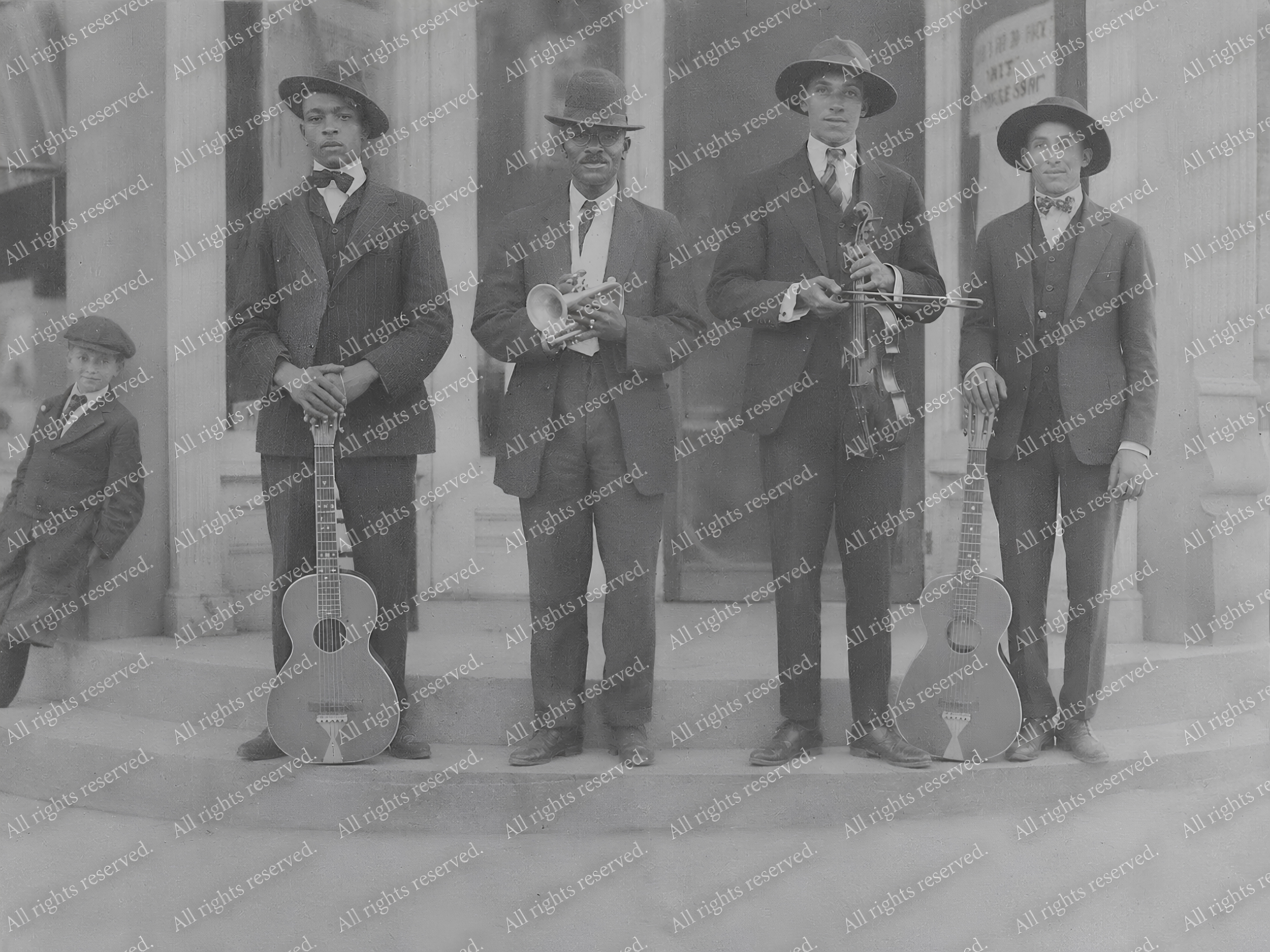
Publishing with Purpose: A Multigenerational Pledge to Preserve History, Archives, and Cultural Heritage
THE BLEU BOOK: 1,000 of the Greatest Lessons I Ever Learned from Photography is engineered as a foundational, six-volume academic and archival collection distilling one thousand pedagogical lessons from sixteen years of high-level practice. Its architectural scope extends beyond traditional publishing to encompass original silver-halide and pigment prints, archival genealogical field research, handcrafted physical editions, higher-education curricula, and international institutional distribution. It is established as an enduring corpus of intellectual property designed for rigorous academic research, cross-disciplinary syllabus integration, and developmental reference across generations. A designated allocation of proceeds from the physical collector’s editions will endow a museum-affiliated, multilingual archival initiative dedicated to historical preservation, oral-history custody, and the protection of vulnerable cultural genealogies. Familial and cultural history is never passively inherited—it must be actively researched, cataloged, legally protected, and transmitted intact. By maintaining primary provenance directly within my sovereign publishing ecosystem, I ensure this scholarly analysis remains permanently linked to its underlying visual archive and enterprise independence, free from the extractive volatility of third-party algorithmic platforms.
Key Takeaways for Seminar Modules
Designed for university lectures, graduate seminars, and advanced masterclasses across German and European institutions (e.g., Visual Culture, Medienwissenschaft, Cultural Archival Studies, Art Market Governance, and Sociology of the Family).
Module 1: Visual Sociology & Archival Absence
Archival Absence as Ontological Catalyst: The irreversible loss of photographic documentation (the absence of a father–daughter portrait; the total visual erasure of an eldest sister) illustrates that historical preservation is not an automatic byproduct of lived experience. Archival gaps shape identity and academic inquiry as powerfully as existing artifacts.
The Epistemic Vulnerability of Memory: Without tangible empirical artifacts, personal and cultural memory remains vulnerable to retroactive revision, institutional marginalization, and temporal erosion.
Module 2: Media Studies, Provenance & Sovereign Publishing
Active Transmission vs. Passive Inheritance: Cultural and familial history demands active archival curation, forensic verification, and rigorous metadata cataloging rather than sentimental assumptions of continuity.
Resistance to Algorithmic Enclosure: Preserving photographic provenance within an independent, sovereign publishing infrastructure protects vulnerable cultural assets from the extractive economic models and unilateral terms-of-service modifications typical of commercial third-party platforms.
Asset Protection Prior to Public Dispersion: Prioritizing intellectual property protection and copyright custody beforepublic or digital dissemination is essential for safeguarding marginalized cultural narratives against commercial exploitation.
Module 3: Organizational Behavior, Systems Theory & Enterprise Longevity
Multi-Order Consequence Modeling: Strategic discernment requires tracing decisions through primary, secondary, and tertiary impacts across decades rather than optimizing for short-term tactical validation or immediate commercial gains.
Strategic Collectivism ("The Chess Principle"): You cannot play chess with one piece. Individual agency reaches its maximum strategic resilience when integrated into a structured, unified collective. Sustainable institutions and resilient family lineages depend upon distributed roles and mutual accountability.
Decoupling Sentiment from Governance: The operational maturity required to reconcile childhood adversity and grant unconditional forgiveness serves as an institutional blueprint: relational resilience and collective longevity require clear boundaries, strategic alignment, and the deliberate separation of past emotional conflict from present collective governance.
Masterclass & Guest Lecturer Journal Exercises
Recommended for postgraduate colloquia, research seminars, and student reflective portfolios.
Exercise 1: The Forensic Inventory of Archival Absence
Prompt: Conduct a systematic audit of your own familial, communal, or institutional visual archive. Identify one defining absence—a person, a pivotal transition, or an institutional milestone for which no primary visual or documentary evidence exists.
Analytical Reflection:
What structural, economic, or behavioral conditions created this evidentiary gap?
How has that specific absence shaped your current interpretation of that history?
If you were tasked with reconstructing the provenance of that unrecorded period, what secondary sources or oral histories would withstand forensic academic scrutiny?
Exercise 2: Mapping Multi-Order Consequences in Creative & Intellectual Property
Prompt: Select a significant intellectual, artistic, or professional asset you have produced or intend to produce.
Analytical Reflection:
First-Order: What is the immediate utility or compensation derived from releasing or licensing this asset today?
Second-Order: What institutional counterparties, algorithmic platforms, or third-party intermediaries gain structural leverage once this asset enters their distribution channel?
Third-Order (Intergenerational): Where will the legal custody, economic yield, and moral rights of this work reside thirty years from now? What structural mechanisms must you establish today to ensure sovereign provenance remains intact?
Exercise 3: Systemic Kinship, Collective Synergy & Conflict Resolution
Prompt: Analyze an essential collective system in which you operate (a familial structure, research collective, or entrepreneurial consortium) through the strategic axiom: “You cannot play chess with one piece.”
Analytical Reflection:
Where has individual ego or hyper-individualism generated systemic fragility in your work or operations?
What unexamined historical frictions must be actively forgone or forgiven to unlock operational synergy across your primary network?
What distinct roles do your counterparts fulfill that compensate for your operational blind spots, and how does your collective governance protect against external institutional volatility?
An Invitation to Higher Education
At its foundation, THE BLEU BOOK is about learning how to see: examining what outlives our immediate moment and recognizing that every record carries human and systemic consequences.
I dedicate this collection to my father, whose belief in my mind gave me the courage to stand firmly in my convictions. I offer it equally to the university students who are actively defining their worldview, and to the professors who challenge them to think beyond conventional boundaries.
I invite university educators, department chairs, academic librarians, and institutional partners to review the working manuscript, engage with its curricular architecture, and collaborate with us on course adoptions, institutional lectures, and academic programming for the upcoming academic year.
Welcome to THE BLEU BOOK.
HAVE 49 MINUTES TO GO DEEPER?
The Seminar Audio Companion
Join our editorial and research team for an in-depth critical dialogue analyzing the qualitative case studies and theoretical frameworks explored in this entry. This long-form companion examines the broader socioeconomic, legal, and documentary implications of the text, bridging written scholarship with oral analysis. While this seminar dialogue will soon be syndicated across major academic and audio distribution platforms, it is accessible directly here.
Press play to continue the analysis. ↓
Institutional & Pedagogical Notice
The analytical frameworks, qualitative case studies, historical interpretations, and professional methodologies presented in this publication reflect the independent scholarship and creative practice of Tasha Bleu LLC. They do not represent the official positions, policies, or endorsements of any commercial brands, academic institutions, corporate sponsors, or third-party organizations referenced herein. All content is published strictly for scholarly inquiry, historical documentation, curriculum integration, and educational instruction. This material does not constitute formal legal, corporate governance, financial, or investment counsel.
© 2026 Tasha Bleu LLC. All rights reserved.
OFFICIAL SAMPLE — THE BLEU BOOK
This excerpt is part of a limited public preview of THE BLEU BOOK, a six-volume educational and collector’s series authored by Tasha Bleu and published under Tasha Bleu LLC.
Additional lessons, unpublished manuscripts, educational frameworks, original commentary, and related intellectual property are reserved for the forthcoming published collection.
COPYRIGHT & IP NOTICE
All original written content, photography, illustrations, creative materials, and other copyright-protected elements contained in this publication are owned by Tasha Bleu LLC or their respective rights holders, as applicable.
This material is provided exclusively for individual, personal and noncommercial evaluation.
Except as permitted by applicable law or expressly authorized in writing by the rights holder, the following activities are prohibited:
Unauthorized reproduction, copying, scanning, downloading, or redistribution of substantial portions of this material.
Republishing, reposting, uploading, or distributing protected content through websites, blogs, social media, newsletters, digital repositories, or platforms.
Commercial exploitation, resale, sublicensing, translation, adaptation, or incorporation into publications or products.
Incorporation of protected material into paid courses, educational products, training programs, commercial presentations, or institutional publications without appropriate authorization.
Unauthorized inclusion of protected material in artificial intelligence training datasets, model-development processes, or commercial content-generation systems.
Public availability of this sample does not constitute a transfer of ownership, grant of a commercial license, or authorization to reproduce, distribute, adapt, or commercially exploit the underlying intellectual property.
All permissions, licensing inquiries, institutional-use requests, and proposed commercial applications must be submitted to Tasha Bleu LLC for written review and authorization.
Nothing in this notice restricts lawful uses permitted under applicable copyright law, including fair use and other statutory exceptions.
RIGHTS ENFORCEMENT
Tasha Bleu LLC reserves the right to pursue appropriate remedies for unauthorized uses that infringe its intellectual property rights, including removal requests, infringement notices, and other remedies available under applicable law.
© 2026 Tasha Bleu LLC. All rights reserved.