THE BLEU BOOK: 1,000 of the Greatest Lessons I Ever Learned from Photography — An Introduction from the Author (Lesson 000)
One Thousand of the Greatest Lessons I Ever Learned from Photography
An IntrO from Tasha Bleu
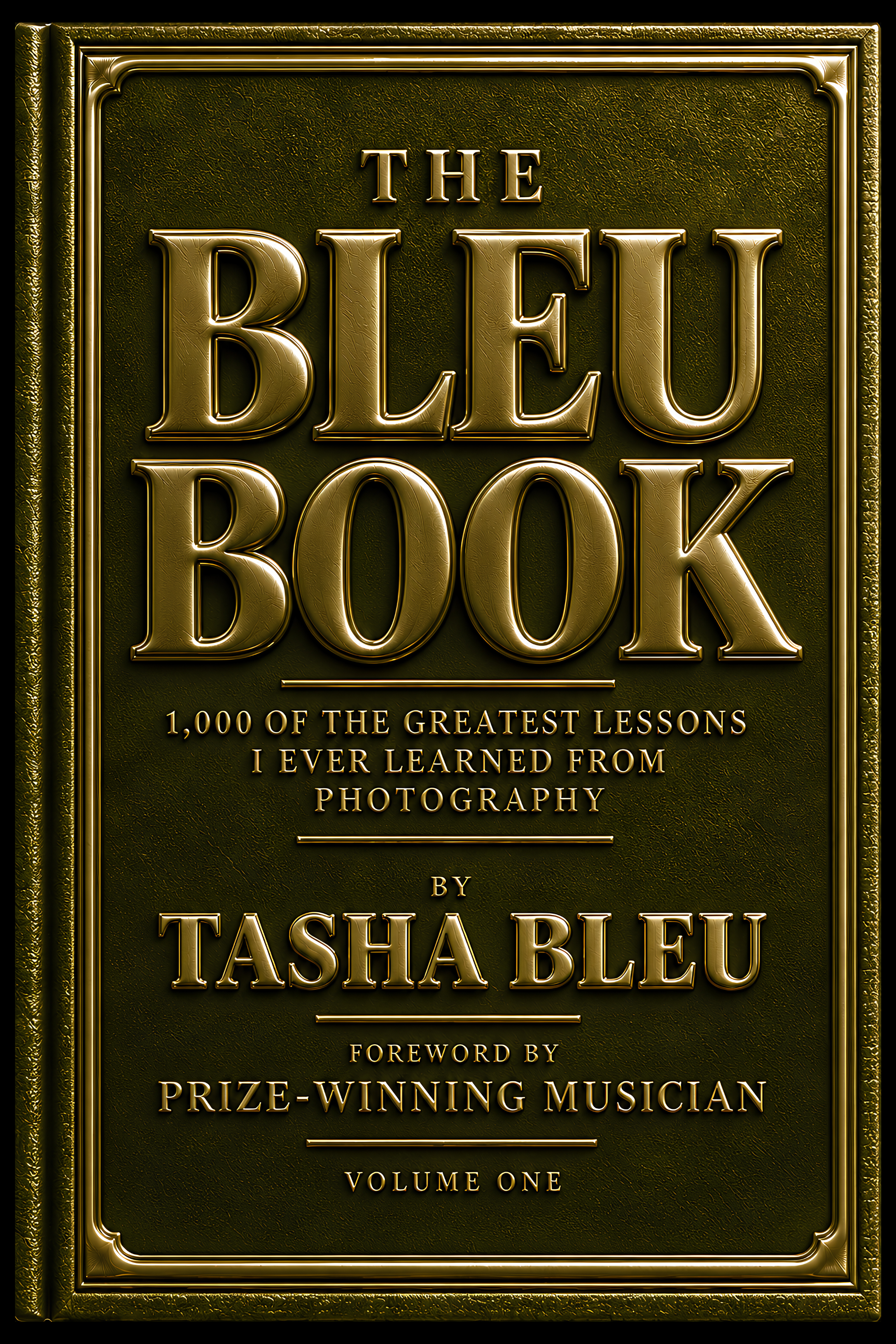
THE BLEU BOOK — VOLUME ONE
Preliminary Cover Design Concept | October 2026
Creative Direction & Publishing Concept: Tasha Bleu LLC
© 2026 Tasha Bleu LLC. All rights reserved.
About The Author
My name is Tasha Bleu, Founding Principal of Tasha Bleu LLC. I am an independent commercial photographer and creative director with sixteen years of experience documenting global fashion, luxury, culture, hospitality, and commerce. My portfolio includes contributions to HYPEBEAST, HYPEBAE, Complex, Highsnobiety, GQ, Vogue, The Rake, and Ivy Style, alongside photographic documentation across more than 150 conventions and commercial environments.
From international publishing and cultural documentation to creative production, architecture, interiors, and emerging industries, my career has taught me that photography is far more than image-making. As I look toward the next sixteen years, my focus expands to the future of living, multigenerational legacy, archival preservation, global development, and the role storytelling plays in shaping humanity’s future.
About The Memoir
1,000 of the Greatest Lessons I Ever Learned from Photography is my personal account of the experiences, relationships, challenges, opportunities, and revelations that have shaped my life behind the lens. Spanning commercial photography, creative direction, cultural history, ancestral traditions, spirituality, psychology, law, economics, emerging technologies, and multigenerational legacy, this memoir examines photography both as a rigorous professional discipline and as a profound responsibility to humanity. Through these reflections, I explore the photographer’s role as a historian, the spiritual and psychological dimensions of image-making, the preservation of human identity, and the duty of protecting photographic archives far beyond our own lifetimes. Some lessons are brief. Others document entire chapters of my life—from wedding photography and international commercial production to spiritual stewardship, family memorial preservation, and the future of human civilization. This is not a universal formula for success; it is a personal record of what photography has taught me about human existence, creative integrity, cultural memory, and the legacies we inherit, protect, and pass on.
An Introduction from the Author
Dear Reader,
Thank you for taking the time to read this memoir. I intend to honor the hours you spend with these pages. Before sharing the lessons themselves, I want to begin with the crucible that shaped them.
I became a photographer because I understood what it meant to lose someone I loved without having the photographs I wished I had taken.
When I was sixteen years old, my father passed away in my arms. That moment fundamentally altered my understanding of time, memory, family, mortality, and the sacred responsibility of preserving a record of human existence.
Not long afterward, as part of my high school curriculum, I traveled to New Orleans to live and work alongside survivors of Hurricane Katrina. At an age when I was still discovering who I was, I navigated profound personal grief while witnessing families confront displacement, catastrophic loss, and the monumental task of rebuilding their lives from scratch.
I did not know then that these twin experiences would chart my destiny as a photographer, documentary observer, creative director, and historian of my own life. More than two decades later, I am still unpacking their impact.
Over sixteen years of professional practice, my camera has granted me entry to extraordinary people, industries, cultures, and environments I once could only imagine. My journey has traversed fashion, luxury, music, international publishing, hospitality, fine-art documentation, and album cover production. Along the way, I became fascinated by the intricate intersections between photography, spirituality, psychology, economics, intellectual property, emerging technologies, and the future of civilization.
Photography became not just a craft dedicated to documenting the world, but an education in how the world actually operates beyond media headlines.
This collection reaches far beyond my personal story. It reflects what photography has taught me about being a responsible steward of our planet, how I define true success, and my role in society as we advance toward the 2030s—an understanding that continues to evolve.
A Thousand Lessons, Not a Thousand Rules
Some lessons in this collection may contradict one another. That is intentional.
The woman I am today does not view every experience the way she did at sixteen. Nor do I expect to interpret the world identically when I am one hundred. Wisdom is rarely consistent, predictable, or comfortable.
Sometimes we plant seeds without knowing what will take root. Sometimes a quiet revelation arrives decades later, dismantling everything we previously believed. When that realization comes, we must be willing to reconsider, change direction, unlearn, relearn, and begin again.
You do not need to wait for January 1 on the calendar to course-correct. You do not need permission to change your mind, or to walk away from a relationship that no longer serves your growth.
For me, that freedom is anchored in accountability. My Christian faith guides how I interpret the path I walk: walking in step with the Holy Spirit, remaining obedient to God, and taking full responsibility for the consequences of my decisions.
I believe in safeguarding my time, understanding my legal rights, establishing unshakeable professional boundaries, delegating responsibilities, and recognizing when an opportunity or partnership has run its course.
Spirituality does not require placing blind, unquestioning trust in everyone you encounter.
Compassion does not require abandoning discernment.
Being a photographer does not require photographing everyone.
And personal growth does not require remaining loyal to obsolete versions of yourself.
These lessons are not prescriptive rules for living. They are honest dispatches of what life taught me, what I believed at different junctures, and how those convictions transformed. I reserve the right to grow beyond every single lesson in this book.
What Photography Taught Me About the World
Photography taught me to pay attention.
It trained me to study human behavior, read rooms, recognize patterns, question unspoken assumptions, interpret cultural symbols, anticipate openings, and always read the fine print. It taught me the discipline required to operate within high-stakes production environments demanding real-time turnaround.
Building my career in New York taught me the commercial significance of physical proximity, split-second timing, fierce competition, relationship capital, media distribution, and intellectual property.
Relocating to Los Angeles expanded my grasp of project management, complex contract workflows, operational risk, production insurance, and net licensing models.
I learned that the value of an image is never dictated solely by how many seconds it took to capture. Its commercial viability should extend far past its initial press release or publication date, generating licensing opportunities for decades. A photographic archive is not merely a graveyard of completed client assignments; curated intentionally, it becomes a durable licensing asset, a historical document, a family heirloom, a museum installation, and an enduring cultural record.
Technical proficiency is merely table stakes. Surviving and thriving as a commercial photographer demands emotional intelligence, discernment, financial literacy, operational rigor, legal fluency, adaptability, and an acute awareness of how creative decisions impact corporate institutions and their stakeholders.
Some of these lessons were born from breakthroughs. Others were forged in rejection, toxic dynamics, professional derailments, personal grief, and quiet failures that took years to comprehend. Every single one shaped the photographer and businesswoman I am today.
Photography, Human Identity, and the Future
The deeper I go into this medium, the less I think about the split second of exposure and the more I consider the afterlife of the artifact.
As artificial intelligence, wearable cameras, smart optics, immersive worlds, and digital archival systems evolve, photographers must re-examine what it actually means to preserve a human life.
By the 2030s and 2040s, humanity will possess near-infinite tools to record every waking second of daily life. Yet the ability to record everything does not guarantee that anything will survive, remain authentic, or be preserved with dignity.
Long-term survival requires conscious decisions regarding intellectual property, archival custody, informed consent, digital inheritance, secure offline redundancy, and generational stewardship.
The question is no longer merely: What can we document while we are here?
The real question is: Who will protect those records when we are gone? How will their integrity be defended, and what will future generations be allowed to inherit?
This is where photography converges with digital estate planning, ancestral continuity, and the architecture of human memory. We must look past our next assignment, exhibition, or transient social media impression, and ask what becomes of our work when we are no longer in the room to defend it.
A Record of a Life in Progress
Though I share these pages publicly, I am not writing solely for an audience. In many ways, I am writing to the six-year-old girl I once was, the sixteen-year-old holding her father in his final breaths, and the matriarch I hope to become decades from now. I am leaving a record for future versions of myself I haven’t met yet.
I cannot control how outside observers interpret my personality, my faith, my business choices, or my history. Some will find strength in these pages; others will disagree. That is their prerogative. My responsibility is to bear witness faithfully, interrogate what each season taught me, and preserve the vantage points I earned along the way.
Some lessons will require a single line. Others will demand extensive personal history, investigative photography, legal frameworks, and deep reflection. We will explore creativity, spirituality, grief, emotional intelligence, contracts, financial sovereignty, delegation, publishing, intellectual property, cultural defense, and the heavy mantle of long-term success. We will also examine the sanctuary of solitude, self-determination, unconventional strategies, and the skill of navigating rooms that were never designed for you.
I am not interested in being agreeable or universally palatable. I am interested in truth. Even when lessons contradict. Especially when they demonstrate just how much I have changed.
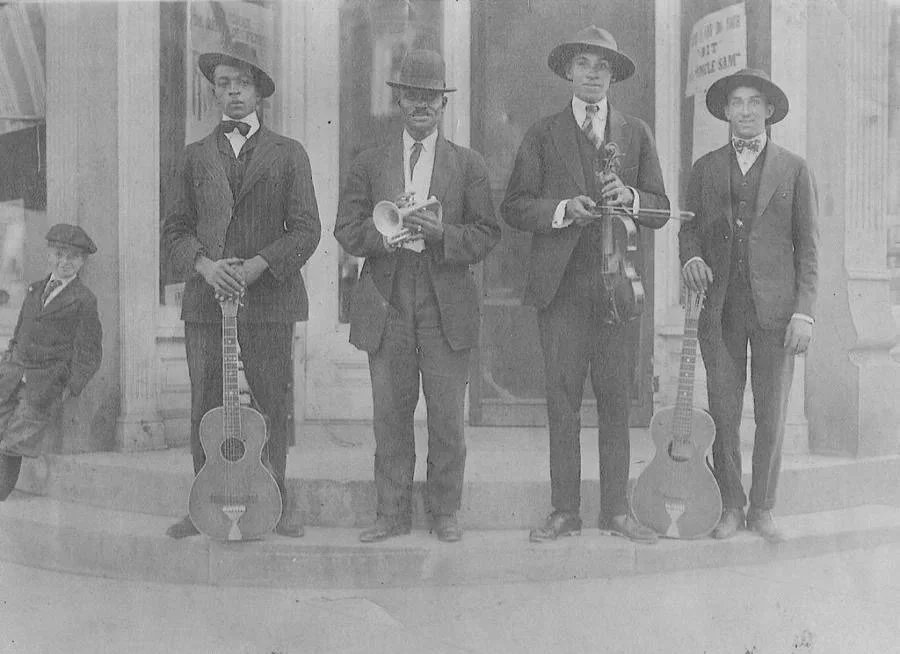
Publishing with Purpose: A Multigenerational Pledge to Preserve History, Archives, and Cultural Heritage
1,000 of the Greatest Lessons I Ever Learned from Photography is conceived as an ambitious, six-volume collector’s edition bringing together one thousand distilled lessons from my life behind the lens.
Its scope reaches beyond digital publishing to encompass original photographic prints, archival research, handcrafted physical editions, educational curricula, international distribution, and the preservation of pivotal cultural movements. It is designed as an enduring body of intellectual property meant to be studied, referenced, and built upon across generations.
A dedicated portion of proceeds from the collector’s editions will support a museum-backed multilingual initiative dedicated to historical preservation, archival stewardship, and the protection of cultural lineages. Family history is never simply inherited—it must be actively researched, cataloged, defended, and passed forward intact.
By establishing the primary home for this manuscript directly on my platform, I ensure my writing remains permanently bound to my visual archive and creative independence. This work deserves to outlast the shifting sands of third-party platforms.
A lifetime of photographs deserves far more than a fleeting moment in an algorithm.
What We Leave Behind
If I die today, I want my work to live tomorrow.
Not out of vanity, but out of reverence for the intentional life. When I look back on these volumes at sixty, eighty, or one hundred, I want to clearly see what mattered to me at every turn. I want to trace what I stood for, what I questioned, what I mastered, and what I had the humility to release.
If these words eventually find their way to a reader I will never meet in this life, I hope they compel you to evaluate your own journey with greater reverence:
To ask sharper questions.
To protect your intellectual property.
To know your worth and enforce your rights.
To document your family history before it fades.
To honor the divine significance of the people across from you.
And to make decisions today that honor the legacy you wish to leave behind.
I began this journey because, despite a childhood filled with his presence, love, and memories, there was never a photograph taken of my father and me together.
When he passed away in my arms on September 11, 2005, I realized that time had closed the door on ever capturing that visual proof. Today, I understand that the absence of a single tangible keepsake can inspire a lifelong commitment to preserving what matters for others.
What do we inherit?
What do we protect?
What do we pass on?
These are the questions we will explore together across one thousand lessons.
An Invitation to Stay True to Your Imagination
What you hold in your hands was never intended to remain a mere catalog of career milestones. These writings are fashioned to serve as lasting instruments of navigation long after my voice has fallen silent—and their true jurisdiction extends far past the mechanics of framing an image.
Beneath the surface of these pages lies a deeper inquiry at the crossroads of Neurotheology and Neuromythology: mapping how our minds construct meaning from trauma, how sacred reverence is biologically anchored within our consciousness, and how divine revelation interfaces with human intellect. I wrote this opening testament to awaken an untapped, sovereign dominion residing inside you. It offers an altered vantage point—a disciplined way of deciphering existence that will revolutionize how you carry your purpose, claim your unassailable territory, and construct your own sanctuary of authority, even when doing so demands the calculated dismantling of what no longer serves you.
You do not need to possess artistic ambitions, nor do you ever have to stand behind a lens to inherit the substance of this work. Whatever your trade, background, or station, you and I are bound by an undeniable, sobering reality at this very moment: our days on this planet are numbered, and not one of us possesses a guarantee of tomorrow.
Each heartbeat quietly measures the distance to our final rest.
Because our window is finite, you cannot afford to sleepwalk through existence. Regardless of your ancestral faith, formal creed, or secular perspective, the imperative remains the same: you must cultivate the discernment required to cut through the noise, distractions, and hollow promises of the physical world. You must hone your capacity for stillness and internal communion with the divine realm—learning to decipher truth in chaos, anticipate the shifts of tomorrow, and operate with absolute clarity.
I do not ask you to step into this six-volume journey with settled theology or unquestioned faith.
My only charge is that as you travel with me across these one thousand lessons, you keep your spirit open. It is my deepest prayer and earnest aim that before you reach the final volume, the weight of these truths will leave you with an unshakable knowing: that the Creator is real, that your steps were ordered before the foundation of the world, and that your life was ordained for an eternal purpose.
Welcome to THE BLEU BOOK.
“If I die today, I want my work to live tomorrow.”
HAVE 28 MORE MINUTES TO SPARE?
Go Beyond the Written Word.
Join my podcast team as they deliver an insightful, rigorous perspective on this personal entry. It is a substantive, compelling listen designed to leave you deeply informed and inspired. Standing among the most impactful long-form content on the internet, this feature allows me to share my journey through my own voice and through the informed analysis of trusted collaborators. While this two-way dialogue will soon be syndicated on Apple Podcasts, it is streaming exclusively here.
Press play. The conversation continues. ↓
Editorial Disclaimer
The views, opinions, professional experiences, and personal interpretations expressed in this publication are solely and exclusively those of Tasha Bleu LLC and do not necessarily reflect or represent the official positions, policies, or views of any individuals, commercial partners, sponsors, corporate clients, or third-party institutions referenced herein. All content is presented strictly for personal reflection, editorial documentation, and educational purposes. Nothing contained within this publication constitutes formal legal, financial, investment, or tax planning advice.
© 2026 Tasha Bleu LLC. All rights reserved.