An Author’s Address: The Academic Vision and Lifecycle of THE BLEU BOOK
One Thousand of the Greatest Lessons I Ever Learned from Photography
Six Volumes on Visual Literacy, Archival Custody, and Lived-Experience Pedagogy for Higher Education
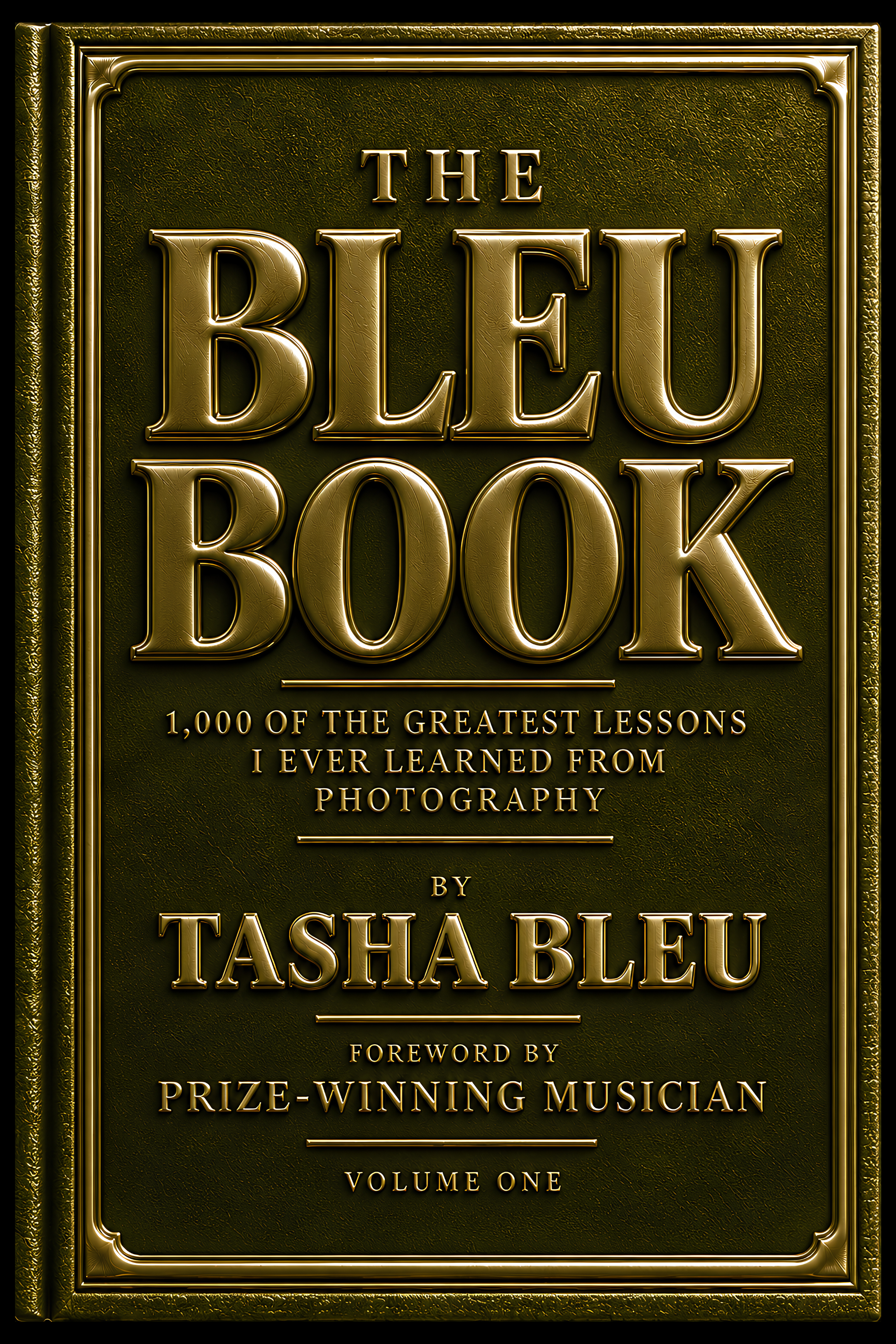
THE BLEU BOOK — VOLUME ONE
Preliminary Cover Design Concept | October 2026
Creative Direction & Publishing Concept: Tasha Bleu LLC
© 2026 Tasha Bleu LLC. All rights reserved.
About The Author
My name is Tasha Bleu, Founding Principal of Tasha Bleu LLC. I am an independent commercial photographer, visual scholar, and executive creative director with sixteen years of field experience documenting global fashion, luxury, cultural institutions, hospitality, and commerce. My professional portfolio encompasses contributions to HYPEBEAST, HYPEBAE, Complex, Highsnobiety, GQ, Vogue, The Rake, and Ivy Style, complemented by comprehensive visual documentation across more than 150 international trade conventions, industrial environments, and commercial productions.
From international editorial syndication and visual ethnography to creative production, spatial architecture, interior design, and emerging technological ecosystems, my career has proven that photography operates far beyond the mechanics of image-making: it functions as a primary instrument of cultural documentation and institutional history. As I look toward the next sixteen years, my research and practice expand toward the future of human habitation, multigenerational legacy governance, archival preservation, global socio-spatial development, and the structural role visual narrative plays in shaping historical memory.
About The Compendium
1,000 of the Greatest Lessons I Ever Learned from Photography is an interdisciplinary, six-volume qualitative casebook analyzing the structural realities, ethical responsibilities, legal frameworks, and psychological dimensions that govern life behind the lens. Spanning commercial visual production, creative direction, spatial sociology, archival traditions, cognitive frameworks of perception, intellectual property law, micro-economics, and multigenerational estate governance, this work interrogates photography simultaneously as a rigorous professional discipline and as an ethical custody over collective memory. Through these dispatches, I examine the documentarian’s function as an institutional historian, the psychological mechanics of portraiture, the systematic preservation of human identity, and the custodial duty of safeguarding photographic archives far beyond the author’s lifespan. Some entries operate as concise tactical maxims; others document expansive field case studies—ranging from high-stakes event production and international commercial campaigns to ancestral memorial preservation and the technological horizon of digital archives. This text does not present a prescriptive commercial formula; it articulates an empirical record of what visual stewardship reveals regarding human existence, creative sovereignty, cultural memory, and the assets we inherit, defend, and bequeath.
The Pivot Toward Academic Rigor
I am Tasha Bleu: an independent commercial photographer, visual scholar, and executive creative director. Over the past sixteen years, my lens has documented global culture, luxury commerce, fashion, and editorial history. Across those years, I have arrived at an inescapable conclusion: photography operates far beyond surface aesthetics. It is a discipline of visual evidence, cognitive discernment, and generational stewardship.
Today, I am formally introducing the academic and pedagogical direction for my six-volume collection, THE BLEU BOOK.
What began as an intimate chronicle of professional practice is now deliberately structured as an interdisciplinary college-level curriculum. This collection is engineered for higher education: designed specifically for university students, seminar professors, academic researchers, research librarians, and institutional leaders seeking primary-source material grounded in lived experience, systems thinking, and ethical responsibility.
My objective is straightforward: to transform sixteen years behind the lens into an enduring body of qualitative case studies, theoretical frameworks, and seminar inquiries that invite students to interrogate assumptions, analyze complex human environments, and apply systematic principles within their own fields of study.
Lineage and the Formative Crucible
My relationship with photography did not begin in a commercial studio or an art gallery; it began in the presence of my father.
My father was a vibrant, constant, and loving force throughout my childhood, and without question, the fiercest champion I ever had. He took my intellect, my curiosity, and my future seriously from my earliest memories. Together, we navigated the Eastern Seaboard, embarked on long road trips, and traveled extensively throughout the American South. He placed immense value on rigorous education, ensuring I was immersed in advanced academic tracks and experiential technical curricula from a young age.
He taught me how to observe, how to defend our surname with dignity in every room I enter, and how to practice profound compassion for others during moments of collective trauma. When he passed away suddenly when I was sixteen, the acute rupture of that loss revealed the true stakes of documentation. My father is central to why I became a photographer, and his foresight is the foundational reason I am an author today. In every sense, this six-volume collection is the direct continuation of what he instilled in me: an unyielding commitment to notice what matters, preserve what survives, and pass actionable wisdom forward to the next generation.
Photography quickly proved that an image is never merely an image. It represents a consequential series of ethical decisions: what is prioritized within the frame, what is excluded, who holds the authority to author the record, and what fiduciary obligations follow once an archive is established.
That understanding was forged in the field during the autumn of 2005. At sixteen, still in acute mourning for my father, I traveled with my high school cohort to Louisiana in the immediate aftermath of Hurricane Katrina. Our curriculum required immersive, real-world service. For weeks, we lived alongside displaced survivors in moldy shelters, sleeping on matching cots, showering with canned water, sharing sunrise porridge, and serving in local soup kitchens while active recovery and systemic breakdown unfolded around us.
We listened directly to survivors recount their realities without media filters, absorbing their stories while witnessing their extraordinary cultural defiance, music, and grace amid total material loss. That immersion taught me the necessity of primary-source testimony and the critical ethics of the absent lens. In moments of profound vulnerability, turning away the camera to honor human dignity is often the highest ethical duty an observer can practice.
In THE BLEU BOOK, personal narratives like these are never presented as unexamined memoirs or universal dogmas. They serve as structured qualitative case material: starting points for systemic critique, ethical debate, and rigorous academic inquiry.
Curricular Architecture and Interdisciplinary Scope
THE BLEU BOOK bridges the gap between field-tested creative practice and formal academic scholarship. Rather than offering subjective inspirational maxims, each volume investigates how images function as legal, cultural, and cognitive records.
The collection addresses core subject areas across higher education:
Visual Epistemology and Media Literacy: Deconstructing how optical technologies encode meaning, establish narrative authority, and shape public perception.
Archival Jurisprudence and Lineage Stewardship: Examining chain of custody, estate governance, intellectual property defense, and the physical preservation of cultural endowments across generations.
Disaster Sociology and Field Ethics: Evaluating institutional response, community resilience, oral history methodology, and the moral responsibilities of bearing witness during humanitarian crises.
Creative Enterprise Governance: Analyzing sustainable business strategy, independent IP ownership, contractual sovereignty, and creator-led commerce models outside conventional gatekeepers.
Cognitive Psychology of Memory: Investigating mnemonic retention, bereavement, and the psychological mechanisms of visual absence.
Every entry in the collection is constructed around four distinct pedagogical components:
The Primary Case Study: An unvarnished, documented narrative establishing field observations, operational contexts, and institutional tensions.
The Theoretical Framework: An analytical synthesis connecting the case study to established sociological, semiotic, legal, or economic disciplines.
Curricular Key Takeaways: Concrete, actionable principles designed for immediate practical translation and analytical synthesis.
Seminar Discussion Inquiries: Rigorous Socratic prompts engineered to drive critical debate and written evaluation within graduate and undergraduate seminars.
Pedagogical Toolkit: Classroom and Institutional Use Cases
Faculty members and department heads can deploy THE BLEU BOOK across a variety of institutional settings:
Primary Course Adoption and Core Text: Serves as a foundational or supplementary text in photography, visual journalism, media studies, communications, and cultural anthropology curricula.
Qualitative Case Studies: Provides real-world scenarios for business, creative entrepreneurship, and pre-law programs studying intellectual property management and independent corporate governance.
Comparative Semiotics Labs: Enables students to contrast personal oral testimony and unrecorded field observations against historical archives, televised media representations, and official government records.
Campus Lectures, Masterclasses, and Residencies: Facilitates structured campus visits, faculty roundtables, and collegiate book lectures that connect students directly with the author’s qualitative research and professional methodology.
The Stewardship Model and Indefinite Lifecycle
When I speak of the full lifecycle of THE BLEU BOOK, I am referring to a permanent educational trust rather than an ephemeral commercial release.
My operational objective is to ensure this six-volume collection remains accessible to university students, academic departments, researchers, and library repositories indefinitely. Fulfilling that commitment requires active institutional stewardship: maintaining formal scholarly editions, updating curricular companion guides, ensuring sustainable digital and physical print availability, and keeping the work open to ongoing scholarly discourse.
Academic value depends on dialogue, not passive acceptance. I actively welcome peer review, student scrutiny, and faculty engagement. Whether a seminar challenges a specific operational premise, introduces fresh empirical evidence, or applies these pedagogical frameworks to emerging technologies, that critical exchange is precisely what gives an educational text its lasting vitality.
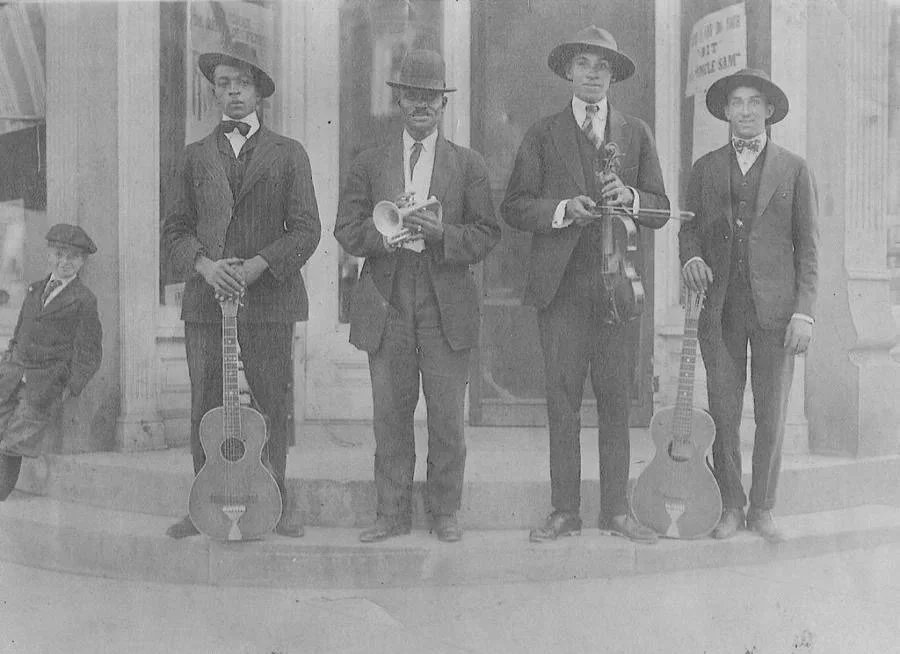
Publishing with Purpose: A Multigenerational Pledge to Preserve History, Archives, and Cultural Heritage
THE BLEU BOOK: 1,000 of the Greatest Lessons I Ever Learned from Photography is engineered as a foundational, six-volume academic and archival collection distilling one thousand pedagogical lessons from sixteen years of high-level practice. Its architectural scope extends beyond traditional publishing to encompass original silver-halide and pigment prints, archival genealogical field research, handcrafted physical editions, higher-education curricula, and international institutional distribution. It is established as an enduring corpus of intellectual property designed for rigorous academic research, cross-disciplinary syllabus integration, and developmental reference across generations. A designated allocation of proceeds from the physical collector’s editions will endow a museum-affiliated, multilingual archival initiative dedicated to historical preservation, oral-history custody, and the protection of vulnerable cultural genealogies. Familial and cultural history is never passively inherited—it must be actively researched, cataloged, legally protected, and transmitted intact. By maintaining primary provenance directly within my sovereign publishing ecosystem, I ensure this scholarly analysis remains permanently linked to its underlying visual archive and enterprise independence, free from the extractive volatility of third-party algorithmic platforms.
An Invitation to Higher Education
At its foundation, THE BLEU BOOK is about learning how to see: examining what outlives our immediate moment and recognizing that every record carries human and systemic consequences.
I dedicate this collection to my father, whose belief in my mind gave me the courage to stand firmly in my convictions. I offer it equally to the university students who are actively defining their worldview, and to the professors who challenge them to think beyond conventional boundaries.
I invite university educators, department chairs, academic librarians, and institutional partners to review the working manuscript, engage with its curricular architecture, and collaborate with us on course adoptions, institutional lectures, and academic programming for the upcoming academic year.
Welcome to the academic edition of THE BLEU BOOK.
Key Takeaways (Curriculum Module)
Visual Epistemology as Primary History: Photography functions not as decorative aesthetic production, but as a primary historical and legal record of human existence, cultural geography, and institutional power dynamics.
Archival Absence as Institutional Catalyst: The loss or omission of primary documentation (e.g., familial records, marginalized community histories) creates an archival void that demands proactive, methodological preservation initiatives.
Enterprise Decoupling: Long-term media sustainability requires transitioning from pure labor-for-fee production to institutional systems governance, rights licensing, intellectual property administration, and delegated operational units.
Longitudinal Custodial Responsibility: The ethical duty of the visual documentarian and media executive does not terminate upon client delivery or media publication; it requires establishing legal, digital, and physical estate frameworks that govern asset custody across multi-decade horizons.
Seminar Discussion Inquiries
How does the commercial commodification of photography conflict with or complement its role as an ethical archive of cultural and familial history?
In what ways do geographic markets (e.g., New York vs. Los Angeles) impose distinct legal, operational, and financial constraints upon independent media enterprises?
As synthetic media and generative artificial intelligence accelerate, what legal and custodial protocols must educational and cultural institutions adopt to verify provenance and protect authentic historical memory?
HAVE 30 MINUTES TO GO DEEPER?
The Seminar Audio Companion
Join our editorial and research team for an in-depth critical dialogue analyzing the qualitative case studies and theoretical frameworks explored in this entry. This long-form companion examines the broader socioeconomic, legal, and documentary implications of the text, bridging written scholarship with oral analysis. While this seminar dialogue will soon be syndicated across major academic and audio distribution platforms, it is accessible directly here.
Press play to continue the analysis. ↓
Institutional & Pedagogical Notice
The analytical frameworks, qualitative case studies, historical interpretations, and professional methodologies presented in this publication reflect the independent scholarship and creative practice of Tasha Bleu LLC. They do not represent the official positions, policies, or endorsements of any commercial brands, academic institutions, corporate sponsors, or third-party organizations referenced herein. All content is published strictly for scholarly inquiry, historical documentation, curriculum integration, and educational instruction. This material does not constitute formal legal, corporate governance, financial, or investment counsel.
© 2026 Tasha Bleu LLC. All rights reserved.