What Hurricane Katrina Taught Me About Bearing Witness (Lesson 003)
ONE THOUSAND of the Greatest Lessons I Ever Learned from Photography
LESSON 003/1000
By Tasha BLEU

THE BLEU BOOK — VOLUME ONE
Preliminary Cover Design Concept | October 2026
Creative Direction & Publishing Concept: Tasha Bleu LLC
© 2026 Tasha Bleu LLC. All rights reserved.
About The Author
My name is Tasha Bleu, Founding Principal of Tasha Bleu LLC. I am an independent commercial photographer and creative director with sixteen years of experience documenting global fashion, luxury, culture, hospitality, and commerce. My portfolio includes contributions to HYPEBEAST, HYPEBAE, Complex, Highsnobiety, GQ, Vogue, The Rake, and Ivy Style, alongside photographic documentation across more than 150 conventions and commercial environments.
From international publishing and cultural documentation to creative production, architecture, interiors, and emerging industries, my career has taught me that photography is far more than image-making. As I look toward the next sixteen years, my focus expands to the future of living, multigenerational legacy, archival preservation, global development, and the role storytelling plays in shaping humanity’s future.
About The Memoir
1,000 of the Greatest Lessons I Ever Learned from Photography is my personal account of the experiences, relationships, challenges, opportunities, and revelations that have shaped my life behind the lens. Spanning commercial photography, creative direction, cultural history, ancestral traditions, spirituality, psychology, law, economics, emerging technologies, and multigenerational legacy, this memoir examines photography both as a rigorous professional discipline and as a profound responsibility to humanity. Through these reflections, I explore the photographer’s role as a historian, the spiritual and psychological dimensions of image-making, the preservation of human identity, and the duty of protecting photographic archives far beyond our own lifetimes. Some lessons are brief. Others document entire chapters of my life—from wedding photography and international commercial production to spiritual stewardship, family memorial preservation, and the future of human civilization. This is not a universal formula for success; it is a personal record of what photography has taught me about human existence, creative integrity, cultural memory, and the legacies we inherit, protect, and pass on.
Documentary history · Humanitarian immersion · Trauma · Oral history · Archival ethics
In the autumn of 2005, I was sixteen years old, walking through an emotional fog. My father had just passed away in my arms, and my entire reality had splintered into something disorienting and unrecognizable.
Shortly thereafter, fulfilling an intensive experiential requirement of my high school curriculum, I traveled into the disaster zone of New Orleans.
Because I attended an alternative-progressive regional technical career center, our academic structure was deeply unorthodox. Throughout all four years of high school, I remained embedded with the exact same tight-knit cohort of fifteen students, guided by one dedicated faculty advisor. Real-world immersion wasn’t an extracurricular novelty for us; it was the foundation of how we learned. We were in the American South as part of an extensive tour of Historically Black Colleges and Universities (HBCUs), visiting campuses across the region because our curriculum held a non-negotiable benchmark: every single student had to earn formal acceptance to at least five colleges in order to graduate. (That milestone ultimately paved my way to Johnson & Wales University in Charlotte, North Carolina.)
Yet when our advisor brought us into New Orleans in the immediate aftermath of Hurricane Katrina, our college tour intersected with the raw epicenter of an American tragedy.
I was an adolescent carrying the weight of acute personal bereavement, suddenly planted in the middle of a catastrophic structural and humanitarian collapse. At sixteen, I could not have anticipated how inextricably intertwined those two realities would become within my spirit.
More than twenty years later, the symmetry of those weeks has crystallized into the cornerstone of how I see the world.
The Shelter, Canned Water, and Sunrise Porridge
The reality on the ground was raw, visceral, and punishing. We did not sleep in hotel rooms or sanitized volunteer camps. We slept directly inside moldy, humid shelters, lying in the exact same cots and beds as the Katrina survivors themselves. The air was thick with the scent of damp sheetrock, stagnant marsh, and rot. Outside, the city was destabilized; sirens wailed in the distance, and active looting was still unfolding across neighborhoods where basic municipal services had utterly disintegrated.
We had no running plumbing. When we needed to wash, we were strictly rationed to showering with canned waters. There were no stalls or curtains; we stood behind salvaged cardboard boxes propped upright just to afford each other a shred of human dignity and privacy.
Every single sunrise, we gathered to eat porridge. That was it. That was all there was to sustain us through fourteen-hour days of grueling, exhausting physical labor.
We established a rigid buddy system within our fifteen-person cohort. We paired off to use the restroom, to wash, and to sleep, taking turns staying awake to watch over one another through the night. Even though the community embraced us with open arms, we understood that the people around us were operating in extreme survival mode. They had been stripped of their homes, their keepsakes, their bank accounts, and their peace of mind. Yet even in that desperate state, they conducted themselves with remarkable moral restraint and quiet dignity.
Because we were there to work with our bare hands, the community took us in. We helped families physically fight for what was left of their properties—clearing waterlogged debris, scraping mud from baseboards, and treating contaminated soil. We stood on our feet for hours dishing out warm ladles at local soup kitchens.
And in return, they gave us something no news broadcast could ever broadcast: they gave us their unvarnished truth.
Straight to the Source: Dancing Through the Pain
By serving beside them day in and day out, I unexpectedly became part of their fabric. I didn’t hear about the breach of the levees or the government abandonment from television anchors or political commentators; I heard it straight from the mouths of the grandmothers, fathers, and teenagers who had floated on rooftops and walked through toxic waters with their babies held above their heads.
That was the first time I learned that truth only exists at the primary source. If you want to know what happened, you cannot rely on the sanitized summaries of third parties who fly in after the storm and fly out before the sun sets. You have to sit at the table with the people who lived it.
Yet what staggered me most was their spirit. In the evenings, inside those dim, musty shelters, the local residents would gather us together and teach us how to dance. They showed me New Orleans footwork, taught me regional dance steps, and introduced me to the local bounce and hip-hop artists whose bass lines were reverberating through the wards. Music was their oxygen. It was their defiance against despair. Watching them laugh, move, and sing amidst the wreckage showed me what human resilience truly looks like: they were dancing through the pain.
On rare days when our high school had saved enough discretionary budget to give our cohort a respite, our advisor would lead us across the train tracks and into the French Quarter.
Walking onto Bourbon Street was like crossing into an alternate universe. We would sit together eating warm, powdered-sugar beignets and fried alligator bites, listening to survival accounts from an entirely different socioeconomic demographic—business owners, tourists who had been trapped, hospitality workers trying to keep their doors open. We absorbed their perspective, gathered our observations, and then walked back across those same train tracks, returning to the moldy shelter cots where we were stationed.
The profound irony of that formative chapter is that I do not possess a single photograph from it.
I desperately wish I had carried a camera on that trip. I wish I had frames of those resilient faces, the watermarks staining the roofs of the Ninth Ward, the cardboard partitions, and the impromptu dance sessions on the shelter floors. But none of us had cameras, and none of us had time to take pictures. Every waking ounce of our energy was devoted to serving, keeping our heads down, and praying we made it back home in one piece.
That silence in my visual archive taught me the permanent value of what goes undocumented. It made me realize that some of the most profound history on earth happens when nobody is holding a camera—and that when you are given the privilege to document history later in life, you owe it everything you have.
Who Is Checking on the “Katrina Babies”?
Two decades removed from those floodwaters, my mind remains fixed on the children:
The children who watched their parents perish.
The children who were separated from their siblings in the pandemonium of evacuation centers.
The children whose schools, family albums, and cultural geography were erased in a single afternoon.
Where are those children today?
Who has sat down to record their testimonies now that they are in their late twenties and thirties?
How have they navigated the long arcs of trauma, adult relationships, higher education, career building, spiritual faith, and their worldview?
How have those early encounters with systemic collapse and loss shaped how they parent their own children, organize their neighborhoods, and protect their households?
I raise these questions because I am actively documenting my own journey more than twenty years after enduring sudden, destabilizing loss at sixteen. I am compelled to ask how many of those young survivors have been afforded the platform, resources, and emotional safety to document theirs.
I also reflect deeply on post-traumatic stress and the enduring psychological ripples of catastrophic displacement. While not every survivor develops clinical PTSD—and it is vital never to pathologize or presume another person’s internal reality without clinical standing—we must interrogate what happens to human beings once the global spotlight turns away from the tragedy that derailed their lives.
The floodwaters recede.
The news headlines shift to the next crisis.
The press cameras pack up and depart.
Yet the survivors must continue walking through the quiet, untelevised aftermath for the rest of their lives.
What My Education Taught Me About History
Concurrently during that formative period, my academic coursework involved studying the scholarship of renowned sociologist and historian James W. Loewen, specifically his foundational research on sundown towns and systemic racial exclusion.
As part of that rigorous curriculum, I had the privilege of visiting Dr. Loewen’s personal residence to interview him directly. That academic engagement ignited my enduring dedication to documentary rigor, spatial geography, genealogical heritage, and the sharp discrepancies that exist between official institutional archives and the actual lived experiences of marginalized communities.
I began interrogating the historical trajectory of my own ancestors:
The specific municipalities and landscapes they occupied.
The cemeteries and sacred grounds where their bodies were laid to rest.
The public records that survived versus those that were systematically erased.
The unrecorded lives whose labor and stories were never afforded institutional preservation.
As my maturity and career advanced, this intellectual inquiry transformed into a steadfast dedication to historical preservation, archival governance, and uncovering the socioeconomic realities that governed previous generations. Photography emerged as the primary vehicle through which I could visually confront, investigate, and preserve those vital historical truths.
History Does Not End When the Cameras Leave
I did not have a camera in my hands when I walked among the wreckage of New Orleans, but I was already mastering the ethical baseline of the craft:
To pay absolute attention.
To listen without editorial imposition.
To observe with humility.
To go directly to the primary source rather than accepting convenient secondhand narratives.
To understand that human suffering and resilience can never be packaged neatly into a headline, a soundbite, or a superficial visual composition.
Rigorous documentary practice carries profound moral and custodial accountability. It demands an uncompromising awareness of the distinction between faithfully bearing witness to an event and exploiting or appropriating someone else’s pain. It requires recognizing that the cultural and historical meaning of an archive deepens and shifts across generations. And above all, it compels us to care about what happens to the human beings in our frames long after the assignment wraps.
Some of the most critical questions in human history do not merely ask: What took place here?
They ask:
What happened in the years that followed?
Who survived the silence?
Who rebuilt the foundation?
Whose legacy was protected?
Whose memory was erased?
And who is still present to listen?
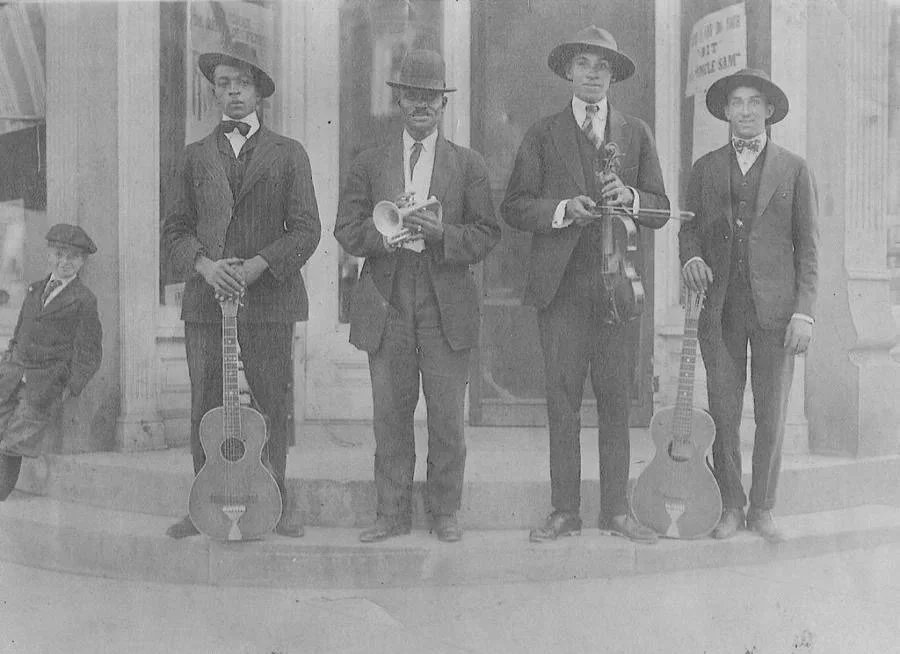
Publishing with Purpose: A Multigenerational Pledge to Preserve History, Archives, and Cultural Heritage
1,000 of the Greatest Lessons I Ever Learned from Photography is conceived as an ambitious, six-volume collector’s edition bringing together one thousand distilled lessons from my life behind the lens.
Its scope reaches beyond digital publishing to encompass original photographic prints, archival research, handcrafted physical editions, educational curricula, international distribution, and the preservation of pivotal cultural movements. It is designed as an enduring body of intellectual property meant to be studied, referenced, and built upon across generations.
A dedicated portion of proceeds from the collector’s editions will support a museum-backed multilingual initiative dedicated to historical preservation, archival stewardship, and the protection of cultural lineages. Family history is never simply inherited—it must be actively researched, cataloged, defended, and passed forward intact.
By establishing the primary home for this manuscript directly on my platform, I ensure my writing remains permanently bound to my visual archive and creative independence. This work deserves to outlast the shifting sands of third-party platforms.
A lifetime of photographs deserves far more than a fleeting moment in an algorithm.
THE ULTIMATE LESSON
History does not conclude when the cameras leave the room.
The ethical duty of bearing witness extends far beyond recording a moment of crisis. It demands an enduring commitment to honor the dignity, sovereignty, and continued survival of the people who must rebuild their lives long after the world stops watching.
True mastery begins when you learn to get straight to the source, honor the people who dance through their pain, and understand that what remains unrecorded still demands your reverence.
“If I die today, I want my work to live tomorrow.”
HAVE 28 MORE MINUTES TO SPARE?
Go Beyond the Written Word.
Join my podcast team as they deliver an insightful, rigorous perspective on this personal entry. It is a substantive, compelling listen designed to leave you deeply informed and inspired. Standing among the most impactful long-form content on the internet, this feature allows me to share my journey through my own voice and through the informed analysis of trusted collaborators. While this two-way dialogue will soon be syndicated on Apple Podcasts, it is streaming exclusively here.
Press play. The conversation continues. ↓
Editorial Disclaimer
The views, opinions, professional experiences, and personal interpretations expressed in this publication are solely and exclusively those of Tasha Bleu LLC and do not necessarily reflect or represent the official positions, policies, or views of any individuals, commercial partners, sponsors, corporate clients, or third-party institutions referenced herein. All content is presented strictly for personal reflection, editorial documentation, and educational purposes. Nothing contained within this publication constitutes formal legal, financial, investment, or tax planning advice.
© 2026 Tasha Bleu LLC. All rights reserved.