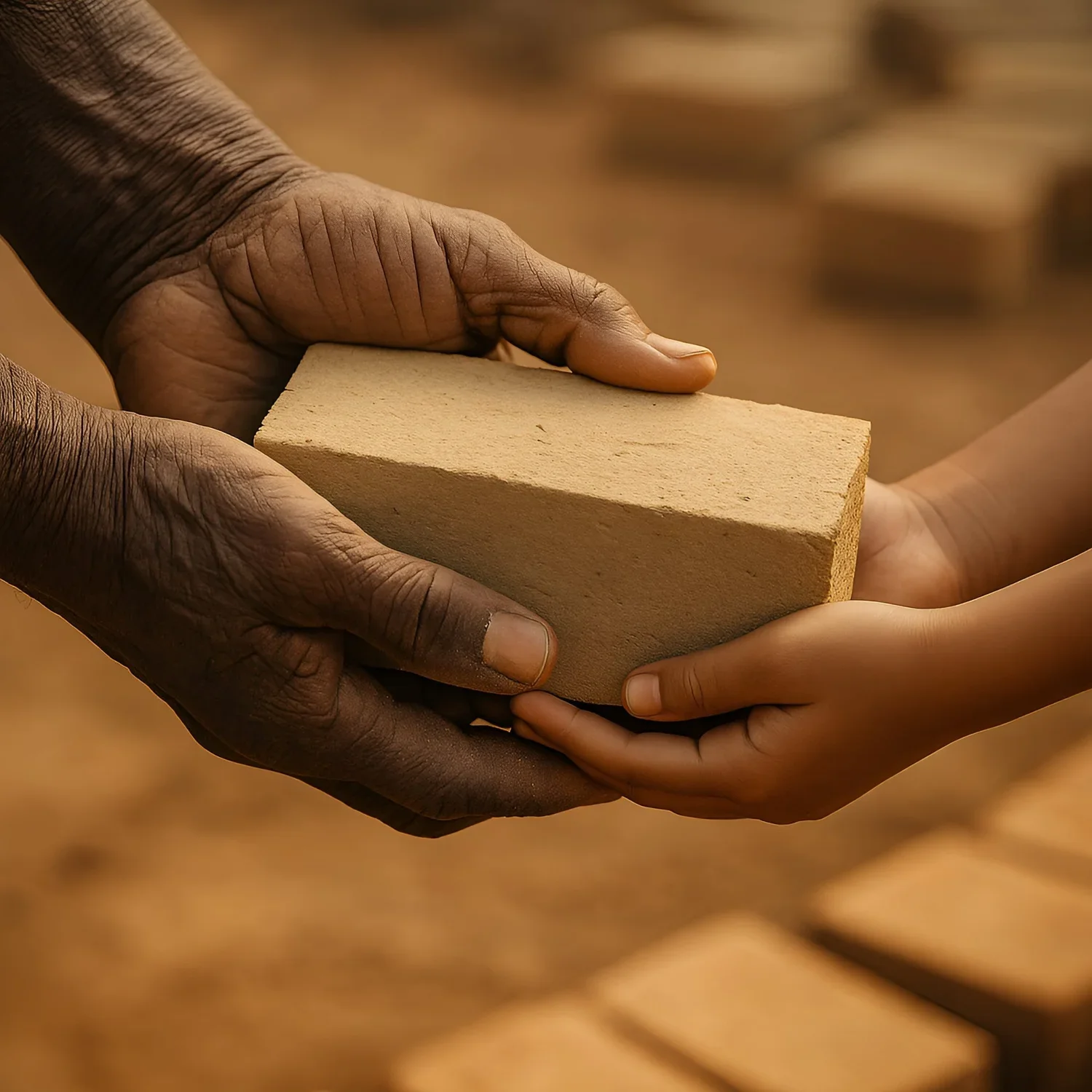
From Classroom to Cityscape: Where visionary board leadership unites edtech innovation and 3DCP to architect Africa's first fully 3D-printed smart city by 2030-building civilization-scale self-sufficiency, one generation at a time.

African Education Infrastructure & Storytelling
Documenting how African storytelling traditions shape scalable education systems, community learning spaces, and future-facing schools
From Rhode Island to Africa
Long before formal classrooms, knowledge was transmitted through narrative, observation, repetition, and collective memory. My work operates inside this lineage, translating African storytelling traditions into contemporary education infrastructure and teaching systems.
This page documents my contribution to education initiatives rooted in Africa and the African diaspora, where storytelling, architecture, and learning environments function together as tools for continuity, dignity, and access.
Africa-Centered Teaching Philosophy
My approach to teaching is grounded in African epistemologies, where learning is communal, intergenerational, and embedded in lived experience. Education is not only content delivery. It is space, ritual, language, and memory. Storytelling serves as both pedagogy and archive.
It preserves identity while preparing future generations to adapt, build, and lead.
This philosophy informs all of my education work, from visual storytelling and curriculum design to infrastructure-level thinking about where and how learning happens.
Education Infrastructure as Storytelling
In recent years, my work expanded into education infrastructure initiatives focused on African contexts and communities historically excluded from durable learning environments.
I contributed strategic advisory and teaching-oriented support to initiatives using advanced construction methods, including large-scale three dimensional concrete printing, to rapidly deploy sustainable school structures across regions. These environments are not treated as temporary solutions. They are designed as long-term storytelling vessels places where culture, language, and learning coexist.
My role emphasized:
Community-centered implementation
Cultural relevance in design and pedagogy
Cross-discipline coordination between educators, builders, and local stakeholders
Long-term scalability across African regions
Capacity Building and Knowledge Transfer
A central priority of this work is teaching alongside building.
Local knowledge, labor, and storytelling traditions are integrated into both the construction process and the educational use of the space. The goal is not replication without context, but continuity with ownership. Education infrastructure succeeds when communities can sustain it, teach within it, and pass its meaning forward.
Why This Work Matters
Africa holds the youngest population on the planet. The future of global education depends on how learning environments are built, taught, and culturally anchored there.
By centering African storytelling as both method and foundation, this work supports education systems that are scalable, dignified, and rooted in identity rather than imposed models.
This page serves as a living archive of Africa-centered education storytelling, teaching philosophy, and infrastructure thinking, documenting how learning spaces can function as instruments of continuity across generations.


At the center of my work is the Father-Focused Storytelling Architecture, a teaching and documentation framework designed to restore the role of fathers as cultural archivists, educators, and identity carriers within families.
This architecture originated in Rhode Island, where I witnessed how generational disruption, economic instability, and systemic erasure weakened the transmission of family history. Fathers were often present, but stripped of tools, language, and platforms to preserve their stories and pass them forward. Rather than framing this as absence, my work treats it as a design problem.
Father-Focused Storytelling Architecture equips fathers with visual storytelling and digital teaching tools that allow them to document family memory, lineage, and lived experience. Photography becomes both method and medium. Teaching happens inside the home, the community, and eventually the classroom.
This framework is not limited to one geography.
It is rooted in my African heritage.
In many African cultures, fathers are custodians of lineage, oral history, and moral instruction. Knowledge is transmitted through story, repetition, and presence. My parents taught me that storytelling is not optional. It is responsibility.
By bridging Rhode Island communities with African storytelling traditions, this work reconnects families to a deeper cultural logic that predates borders, institutions, and schooling.
Uplifting Families Through Teaching
This architecture uplifts families by restoring dignity to their narratives.
Fathers are positioned not as subjects of intervention, but as teachers.
Children become participants in their own history.
Families build living archives that reinforce identity across generations.
As this work expanded into Africa-centered education initiatives, the same principles applied. Learning environments, whether homes, community spaces, or schools, function as storytelling containers. Infrastructure supports pedagogy. Pedagogy supports continuity.
From Rhode Island to African communities, the throughline is the same.
When families control their stories, education becomes sustainable.
When fathers are empowered to teach through storytelling, continuity follows.
Why This Matters Across Continents
Africa and the African diaspora share a common challenge. Disrupted storytelling weakens education. Restored storytelling strengthens families. This work aligns teaching, storytelling, and education infrastructure into a single system that supports families locally while honoring ancestral knowledge globally.
It is not symbolic.
It is practical.
It is teachable.
And it is transferable across geographies.
