LESSON 001/1000: Photography Is Spiritual. Cameras Document Time, Capture Souls, and Reveal Energy
1,000 of the Greatest Lessons I Ever Learned from Photography
LESSON 001 / 1,000
By Tasha BLEU
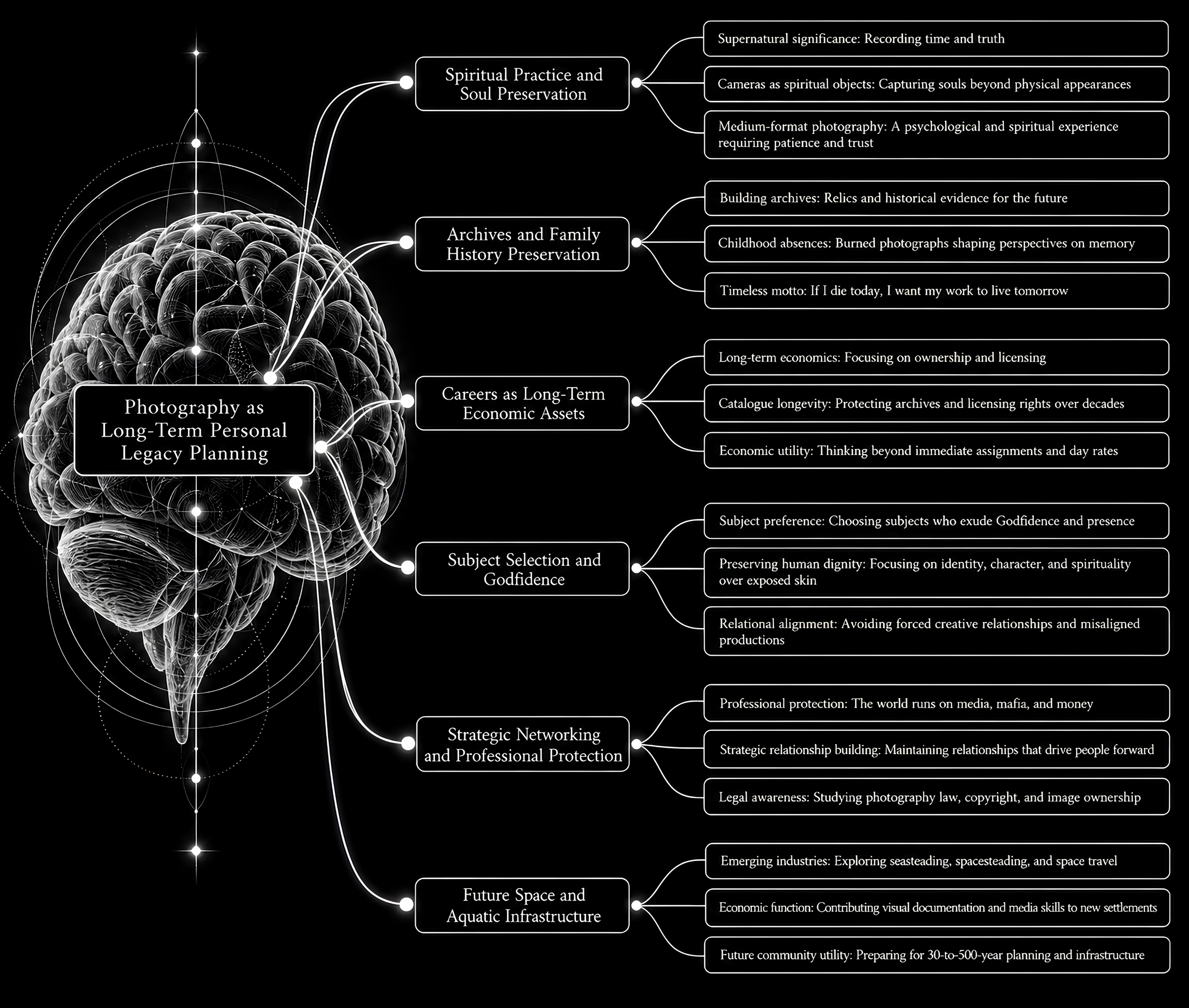
Photography Is Spiritual. Cameras Document Time, Capture Souls, and Reveal Energy.
1,000 of the Greatest Lessons I Ever Learned from Photography
LESSON 001 / 1,000
By Tasha Bleu | October 27, 2026
The greatest lesson I have learned from photography is that photography is profoundly supernatural. Everything in life is spiritual to me, but photography holds a particularly profound significance because photographers record time.
Cameras prove that time is happening. Cameras prove that life is happening as it happens.
And most importantly, cameras do not lie.
I’m not talking about Photoshop, camera angles, or wearing black to appear slimmer. I’m talking about energy, synergy, and spirituality.
I believe people often fail to value photographers because they do not fully appreciate the value of time. They don’t understand that we are building archives that will become relics in the future.
We are historians and documentarians, preserving evidence of lives, relationships, environments, and moments that can never exist in precisely the same way again.
Why I Became a Photographer
I became a photographer because God put it on my heart. I realized that I didn’t have photographs with my father, and I wanted to immortalize parents through photography.
Before pursuing my career in New York City, where I worked with Pharrell Williams, I began as a destination wedding photographer. My first actual booking was for a wedding in Jamaica.
That was my motivation before I entered the convention circuit, before my photography career became increasingly commercial, and before I encountered the politics of the industry.
Photography began as something personal, spiritual, and deeply connected to the people I loved. One of the objects my father left for my brother, which my brother later gave to me, was a vintage medium-format camera.
Being around that camera made me feel as though my father was in the room.
That experience reinforced something I have long believed: cameras are spiritual objects. To me, they capture something beyond imagery.
They capture souls.
Cameras Do Not Lie About Energy
Throughout my career, I’ve photographed people in environments involving celebrities, substantial production budgets, and commercial expectations. I’ve also photographed family members where no money was involved.
One thing I’ve learned is that you cannot force spiritual alignment or photographic compatibility, even with family members.
There have been instances when I’ve attempted to establish the right energy in a production environment, only to recognize a fundamental misalignment between myself and the subject.
I even recall an experience when my camera literally jammed and appeared to overheat in my hands while I was photographing one rapper. Yet when I turned the same camera toward another rapper in the room, it worked perfectly.
I continued switching between the two subjects, and the camera repeatedly jammed when I returned to the first rapper.
For me, the experience reinforced my perception that there was an energetic misalignment.
I am not claiming supernatural powers or asserting that I established a supernatural explanation for the camera’s behavior. I am describing my own experience and how I interpreted it as a spiritual human being.
There are also artists and rappers I would not photograph under any circumstances, whether at a concert, in a studio, or in the most intimate creative environment. Even when money is involved, even when bills need to be paid, certain creative relationships cannot be forced.
Photography has taught me that spiritual and interpersonal alignment matter more to me.
The Psychology and Spirituality of Creating
As I delved into the spiritual history of photography and began tracing its origins, I became intrigued by cultural beliefs surrounding cameras and the act of being photographed.
Throughout my international career, I have encountered environments that challenged my understanding of photography beyond its creative and commercial applications.
Those experiences taught me that photography is not interpreted or welcomed in the same way everywhere in the world.
What one community considers an ordinary act of documentation, another may interpret through cultural, religious, or spiritual traditions.
I became particularly interested in how different societies approach photographic documentation, cultural heritage, personal identity, privacy, and the preservation of historical narratives.
I also began studying beliefs and traditions that associate photography with the capture or preservation of the human soul.
These perspectives fundamentally expanded my understanding of what it means to photograph another person. Photography is not always perceived as a neutral act of image-making.
A camera can represent documentation, preservation, visibility, cultural influence, or something deeply personal and spiritual.
Photographers working internationally must understand the distinctions between creative freedom, cultural expectations, property rights, privacy, and the laws governing photography.
This is especially important in photojournalism, international publishing, and commercial photography, where the responsibilities associated with creating an image may extend far beyond the moment it is captured.
To me, photography is simultaneously spiritual, psychological, historical, cultural, and legal.
Understanding those dimensions has become an essential part of how I approach the people, places, and environments I document.
Because being a photographer is not simply about understanding what you have the technical ability to capture. It is about understanding the significance of what you are capturing, the responsibility that comes with documenting it, and the legacy that image may leave behind.
Photography, Cemeteries, and Legacy
As my interests evolve toward cemetery ownership, gravestone restoration, and memorial documentation, I am beginning to understand my lifelong mission differently, particularly through the responsibilities I associate with being an heir to my family’s history. I find myself comparing my existing photographs of living people with my desire to photograph my family’s gravestones.
This is part of my mission to restore, document, preserve, and maintain my family graveyard, for which I am currently pursuing ownership.
My broader plans also involve exploring the preservation and ownership histories of religious temples in the Southern United States with which my grandfather was affiliated as a member.
These are long-term objectives rooted in my responsibility to preserve my family’s history. As I navigate the legal, historical, and practical considerations of ownership, restoration, and stewardship, I am beginning to recognize an even deeper connection between photography and the preservation of human existence.
When I photograph someone who is alive, I am documenting a moment in their life. When I photograph a gravestone, I am documenting the physical memorial of someone who once lived.
Both are records of human existence.
Both preserve memory.
Both raise questions about what remains after someone dies, who becomes responsible for preserving it, and how future generations will remember those who came before them.
These experiences have led me to believe that legacy extends far beyond photographs, public recognition, personal affection, or someone’s economic contribution to society.
For me, legacy is legacy planning—and that includes digital estate planning and the preservation of your identity in perpetuity.
It is about understanding who will own, inherit, manage, and protect your photographs, your image, your likeness, your intellectual property, and your personal archives and you were gone.
It is about deciding who will have the authority to preserve your life story rights, maintain your digital presence, license your work where legally permitted, and make decisions about how your identity and creative contributions are represented to future generations.
It is about what can be preserved, what can be legally documented, what can be placed in a will or estate plan, what holds tangible or intangible value, and who will take responsibility for protecting what remains.
Because leaving behind photographs is not the same as leaving behind a plan for those assets.
You can dedicate your entire life to creating an extraordinary visual legacy, but without establishing who will be responsible for its protection, you risk losing it all.
Who will continue your legacy afterwards?
Who will cherish your photographs?
Who will preserve your relics, memorials, archives, and personal history?
These questions are important to me.
The Photographs I Do Not Have
I don’t have photographs with my father.
I also don’t have photographs from my childhood because my sister burned them.
I cannot even look back at a photographic record of my own childhood.
I have very few photographs of myself smiling.
These absences have profoundly shaped how I understand memory and preservation.
Perhaps that is part of why I became so committed to immortalizing other families.
I understand what it means when the photographs are no longer there.
A Lesson That Will Continue to Evolve
My answer to the question of the greatest lesson photography has taught me changes as I evolve.
Every day, I learn more about the planet, humanity, Earth, myself, my economic function, and what I am here to contribute to society.
After 16 years, I look at photography differently than I did when I first picked up a camera.
But something I have been researching in recent years has brought me closer to understanding why I became a photographer in the first place.
As I began studying Feng Shui, ancestral traditions in Asia, multigenerational burial practices, and the spiritual significance of family memorials, I encountered the belief that married couples buried together can symbolize eternal matrimony, ancestral continuity, and protection extending through their bloodline.
That belief profoundly changed how I began looking at my own family history.
My grandparents and great-grandparents chose to be buried together.
For much of my life, I understood those decisions primarily as expressions of love, marriage, family, and remembrance.
Today, I see them through a different spiritual lens. I understand their burial choices as acts of devotion and protection, intended not only to honor their relationships during their lifetimes but also to preserve the strength and continuity of the generations that would follow.
And suddenly, my own photographic journey began to make even more sense.
I became a photographer because I didn’t have photographs with my father.
I wanted to immortalize people because I knew what it meant to live without the images that could help preserve their presence.
But the more I study my family history, the more I realize that my ancestors were thinking about preservation long before I picked up a camera.
They were making decisions about what would remain. They were thinking about family, continuity, and the generations that would come after them. And now, generations later, I am thinking about those same questions through photography, archival ownership, digital estate planning, cemetery preservation, and the future of my family’s legacy.
What I once understood as a personal calling, I now understand as a larger responsibility.
I feel more Godfident than ever that photography was placed on my heart by God for a mission greater than my own lifetime.
I do not believe my purpose ends with creating beautiful photographs, documenting extraordinary people, or building a successful commercial career.
I believe those experiences have prepared me for something much bigger.
Photography has given me keys.
Keys to industries I never imagined entering.
Keys to relationships across continents.
Keys to space travel, floating cities, underground bunker communities, and the future of humanity.
And I have learned that the responsibility of possessing those keys is knowing when, where, and why to use them.
My purpose requires me to keep learning, enter new markets, explore new industries, and continually evolve beyond the limitations of any single professional title.
Because I am not simply interested in documenting the world as it exists today.
I want to understand what will happen to the world tomorrow, who will inherit it, and what we can preserve for the generations that follow us.
That is why I believe photography is spiritual.
Cameras document time. Cameras capture souls. And cameras do not lie about synergy, energy, and spirituality.
A photograph can outlive the person who created it.
It can outlive the person standing in front of the camera.
It can travel through generations, cross oceans, enter archives, become a family relic, and eventually reach someone who was not even alive when the shutter was pressed.
That is an extraordinary responsibility.
And if there is one thing my experiences have taught me, it is that the greatest value of photography may not be fully understood until long after the photographer is gone.
I began this journey wanting to preserve the people I loved.
Sixteen years later, I am learning that preservation is only the beginning.
There are far greater lessons I have learned about the psychology of photography, the economics of media, the legal responsibilities of image-making, the power of relationships, and how a camera can open doors to industries shaping the future of human civilization.
I will explore those experiences throughout this collection.
But everything begins here.
With my father.
With a camera.
With the ancestors who came before me.
And with my belief that the work I create today should mean something to people I may never live long enough to meet.
If I die today, I want my work to live tomorrow.
— Tasha Bleu
This essay is Lesson 001 of 1,000 of the Greatest Lessons I Ever Learned from Photography, an ongoing collection of personal reflections drawn from my experiences as a commercial photographer and creative director.
TASHABLEU.COM
Editorial Disclaimer
The views, opinions, experiences, and personal interpretations expressed in this publication are solely those of Tasha Bleu and do not necessarily reflect the views of any individuals, organizations, employers, clients, or institutions referenced. All content is presented for personal reflection, editorial, and educational purposes and does not constitute legal, financial, or other professional advice.
© 2026 Tasha Bleu LLC. All rights reserved.