THE CLASSROOM: Agentic Eyewear and the Future of Professional Education, Vocational Training, and Skilled Trades



Tasha Bleu, Principal of Monetization at Tasha Bleu LLC

16-Pilot Accountability and Protective Documentation
The Tasha Bleu LLC Universal KPI Framework establishes a protective documentation structure for BIPOC entrepreneurship engagement. Each of the sixteen NYSE-listed corporate pilots produces a co-branded, audit-ready case study documenting measurable outcomes. The KPI matrix captures engagement, participation, accessibility reach, and corporate accountability metrics across the full deployment cycle. This documentation framework stabilizes corporate activation environments by ensuring every outcome is recorded, phase-verified, and governance-documented. Through the Meta Wearables Device Access Toolkit, the system generates verifiable, durable data that strengthens long-term infrastructure.
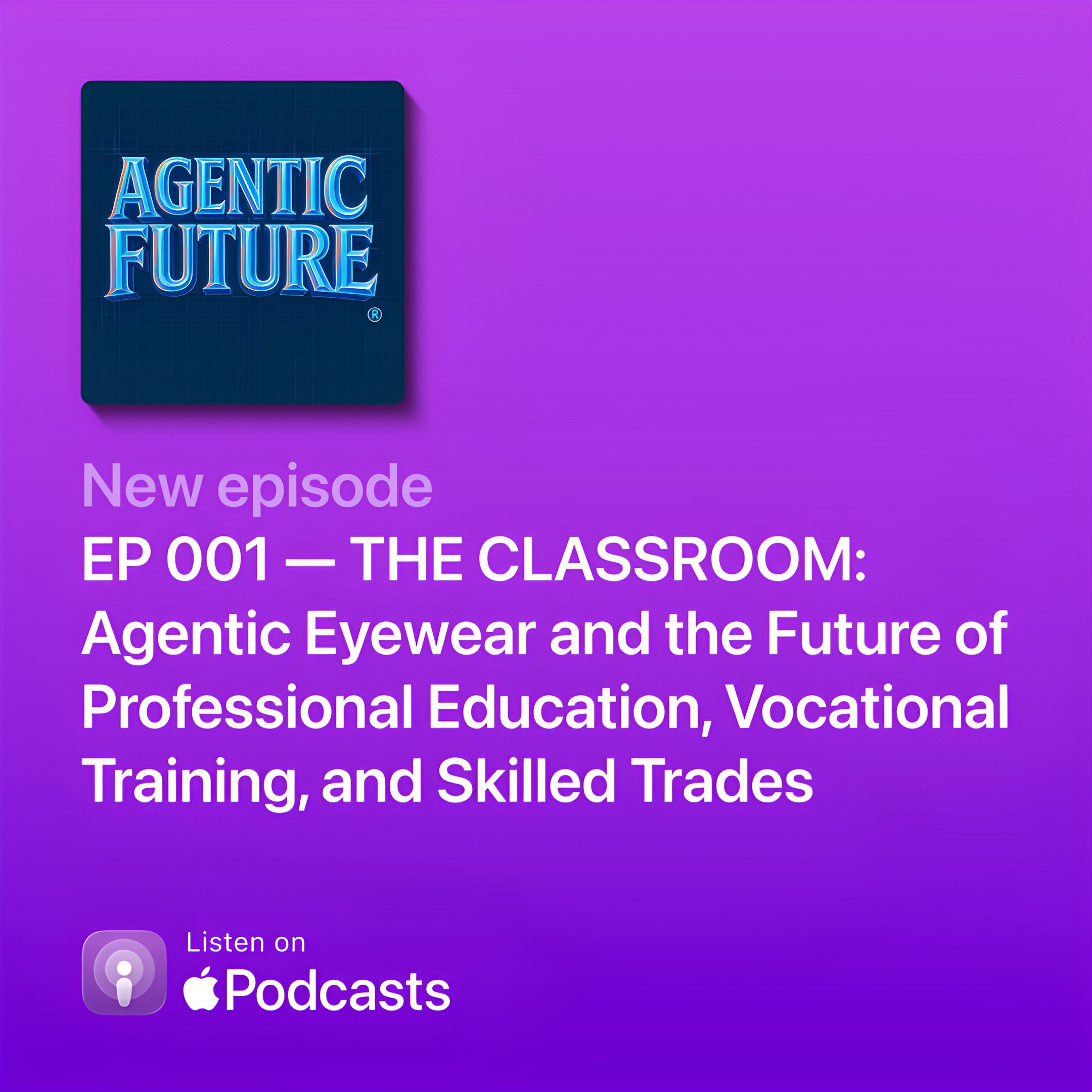
EP 001 — THE CLASSROOM: Agentic Eyewear and the Future of Professional Education
This inaugural episode introduces the first real-world frontier for agentic systems: the classroom.
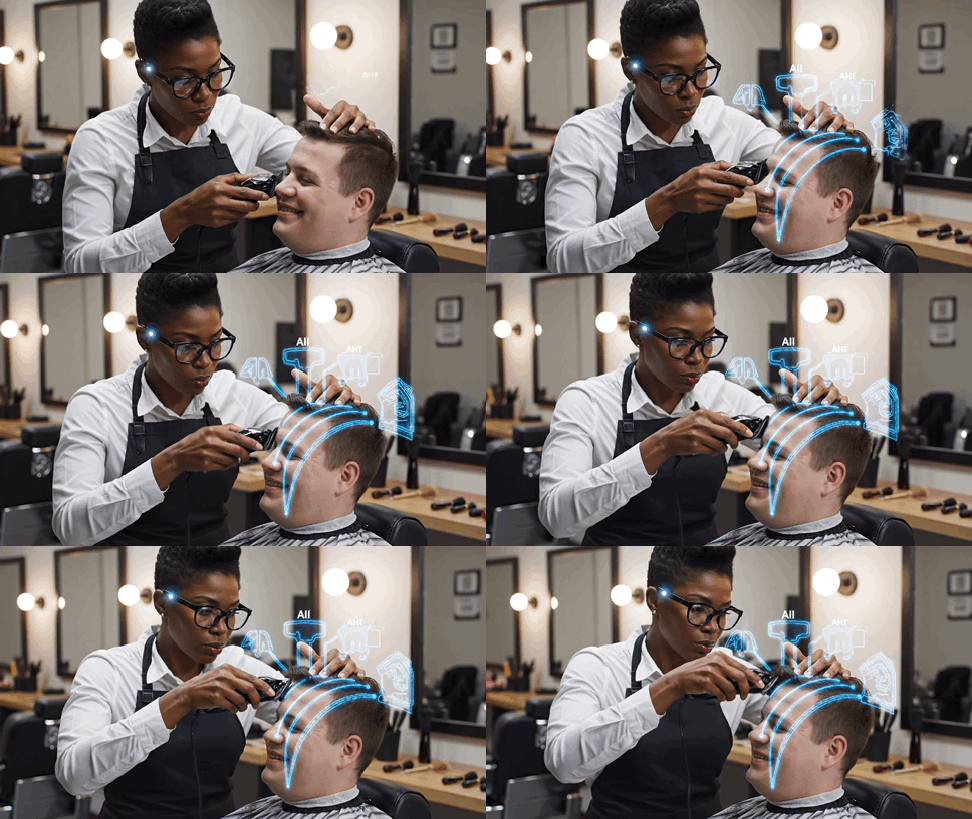
Host Tasha Bleu examines the AI Glasses School Initiative, a strategic framework designed to integrate wearable artificial intelligence into vocational education environments. The episode explores how agentic eyewear may transform the way technical skills are taught, practiced, and documented across beauty education, skilled trades training, and learning environments.
Drawing from the proposed integration with Paul Mitchell Schools, this episode explores how artificial intelligence glasses could enable hands-free instruction, real-time guidance, and spatial learning environments where students receive immediate feedback during skill development.
The initiative examines how AI eyewear may support:
• Advanced skill acquisition through spatial learning environments
• Ethical governance frameworks for artificial intelligence in education
• Hands-free instructional systems for educators and trainers
• Real-time technical guidance for students
• New digital learning products and institutional licensing opportunities
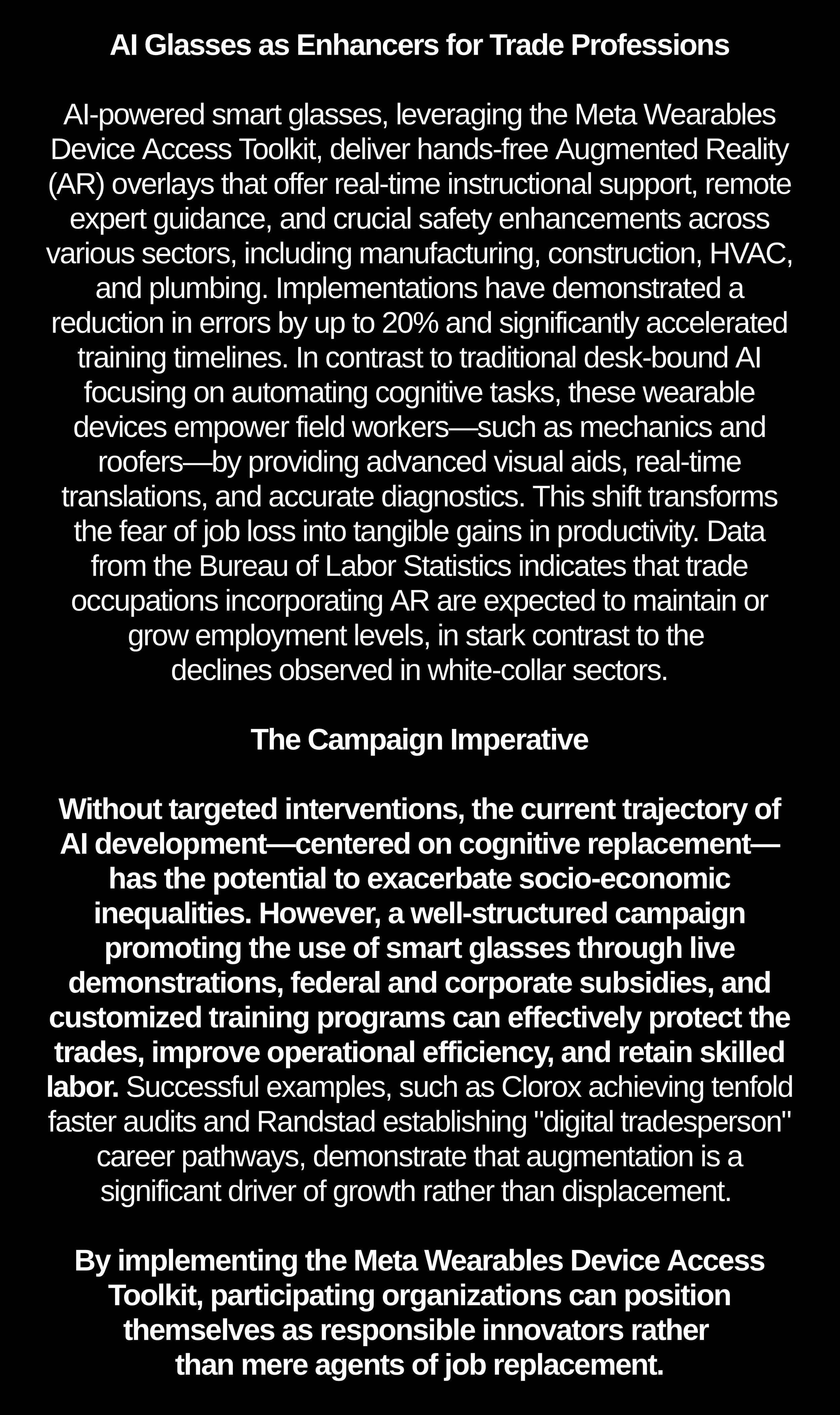
Rather than replacing educators, agentic systems may serve as instructional infrastructure—augmenting the learning process while supporting responsible deployment frameworks.
This episode explores how vocational education environments may become the earliest large-scale testing grounds for responsible wearable artificial intelligence. The classroom becomes the laboratory. And the next generation of professionals becomes the first generation trained alongside agentic tools.
⸻
This is not financial, legal, or medical advice.
AGENTIC FUTURE documents research initiatives, educational experiments, and emerging frameworks examining how wearable artificial intelligence may interact with real-world learning environments.
⸻
PARTNER WITH US
Educational institutions, technology developers, and workforce organizations exploring responsible artificial intelligence deployment may collaborate with AGENTIC FUTURE through pilot documentation, educational research, and strategic conversations.
Potential collaborations include:
• Educational pilot programs
• Episode partnerships
• Institutional research initiatives
• Workforce training demonstrations
Organizations interested in participating in future documentation initiatives may contact:
team@tashableu.com
⸻
Forward-Looking Statement
The concepts, technologies, and potential applications discussed in this episode—including wearable artificial intelligence in educational environments—reflect current research directions and proposed frameworks.
Such discussions involve evolving technologies and regulatory considerations. Future outcomes may differ as adoption patterns, governance frameworks, and technical capabilities develop.
AGENTIC FUTURE provides documentation and discussion rather than predictions of outcomes.
⸻
Your Move
Listen now.
Explore how wearable artificial intelligence may reshape the way professional skills are taught, practiced, and documented.
As agentic systems begin moving beyond software and into physical environments, the classroom may become one of the first places where humans learn to work alongside AI tools.
The future of education is not just digital.
It is agentic.
And this series documents how it begins.
For legal terms, creative rights, boundaries, and usage policies associated with this podcast, please visit: www.tashableu.com/governance
Somatic Detection and Prosthetic Resilience Scanning
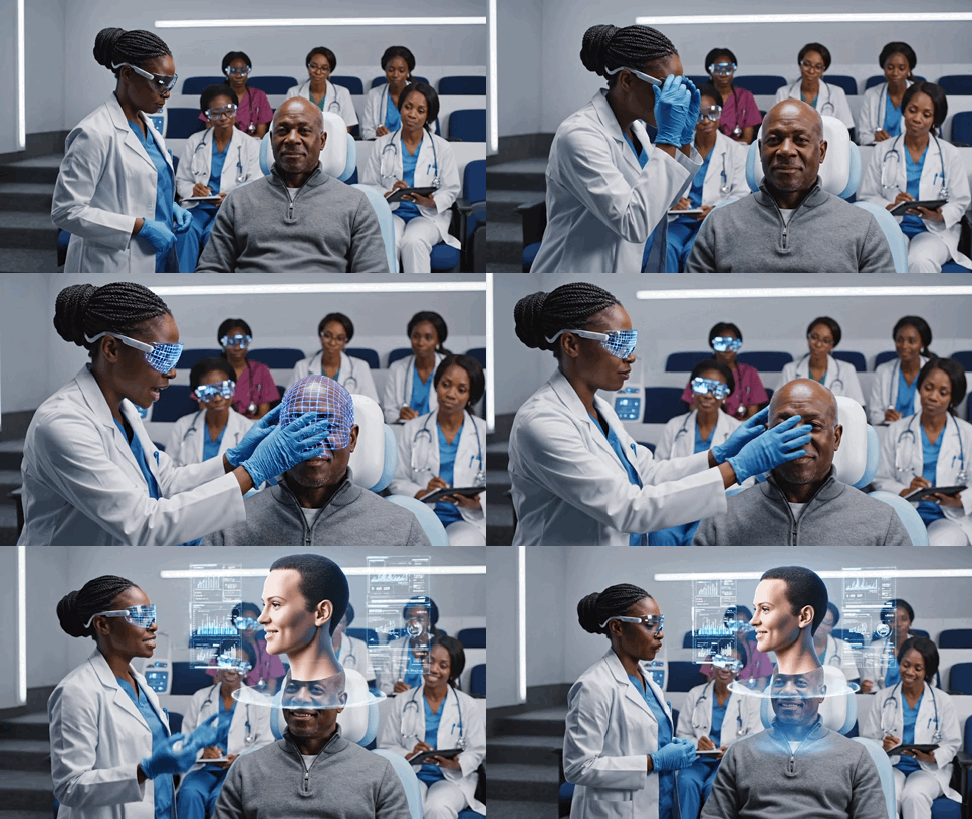
The Postural Pause system applies a clinical diagnostic framework to detecting entrepreneur distress within high-decibel event environments. AI-enabled glasses analyze facial posture, micro-expressions, and somatic tension to identify early-stage signals of overwhelm. When these signals are detected, the system activates navigation assistance and safety support in under two seconds. This capability operates similarly to a specialist fitting a prosthetic device for structural stability and balance — scanning for hidden distress and triggering support before participants disengage from opportunity environments. This marks the first deployment of somatic detection technology within a BIPOC entrepreneurship context.


All forward references to hardware generations are conditional and hypothetical. If selected for grant funding, all hardware-specific integration planning would be updated to align exclusively with officially released, publicly verified, and commercially available Meta devices.
The “500-Year Map” referenced in this submission is a conceptual, research-driven long-horizon planning framework intended to model multigenerational infrastructure evolution scenarios. It does not represent insider knowledge of Meta’s long-term strategy, corporate partnership status, product guarantees, or technological certainty. It is a speculative systems-design exercise grounded in publicly observable technological trajectories, demographic modeling, maritime infrastructure trends, and distributed computing theory. All projections are illustrative and non-binding.